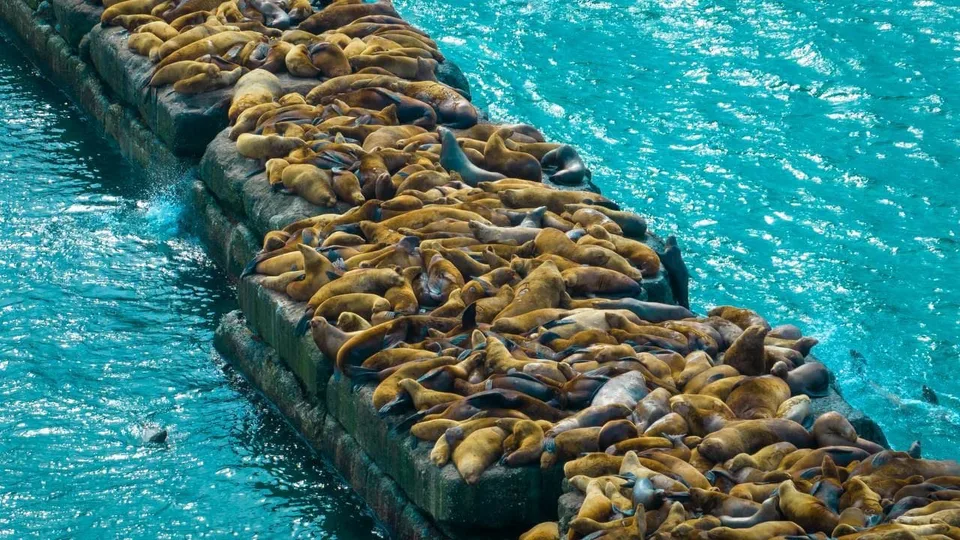

Steller Sea Lions at Nevelsk — Sakhalin's Urban Colony
Nevelsk is the only place on Sakhalin Island where Steller sea lions haul out in an urban harbour year-round — a few dozen metres from the breakwater, with no boat, no restricted zone and no waiting for low tide. AMIST runs half-day excursions from Yuzhno-Sakhalinsk pairing close-range observation of Russia's largest pinniped with a short walk through this compact fishing port on the Tatar Strait.
About the excursion
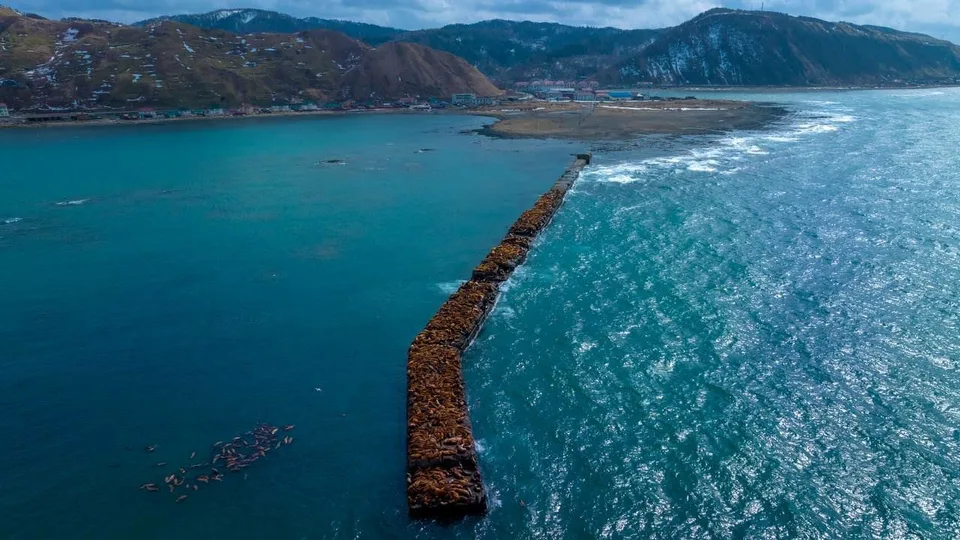
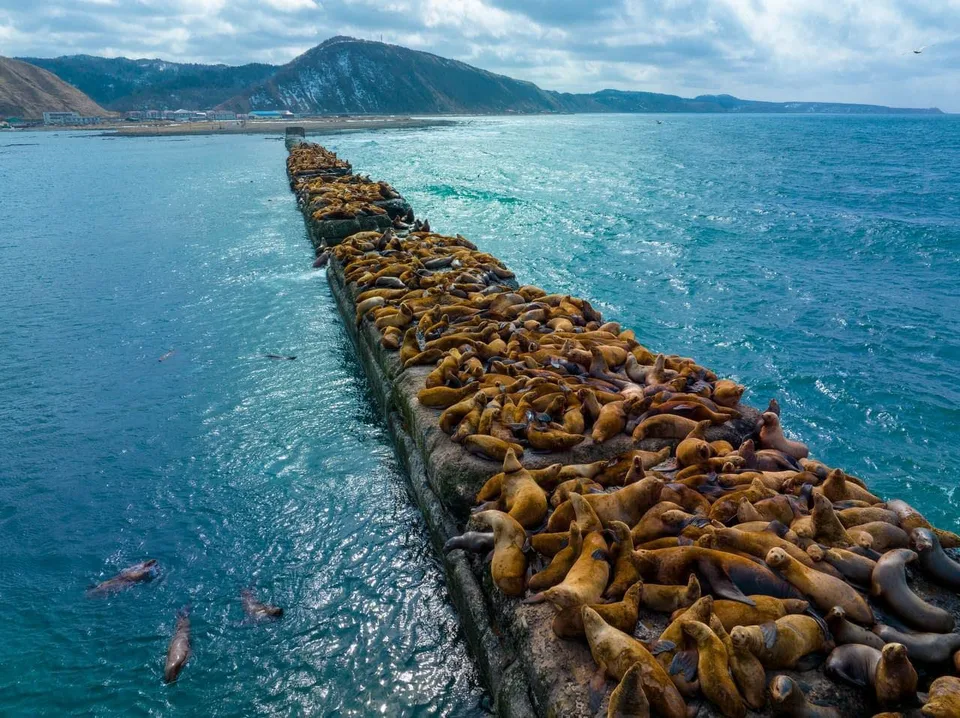
Most wildlife encounters on Sakhalin Island require a sea voyage, a long drive or a measure of luck. The Nevelsk sea-lion haul-out is a rare exception: a permanent, accessible, genuinely spectacular aggregation of Steller sea lions (Eumetopias jubatus) — the largest pinniped in the Northern Hemisphere — situated not on a remote rock but on the concrete breakwater structures of a working fishing port, about 120 km south of Yuzhno-Sakhalinsk on the Tatar Strait coast.
About the colony
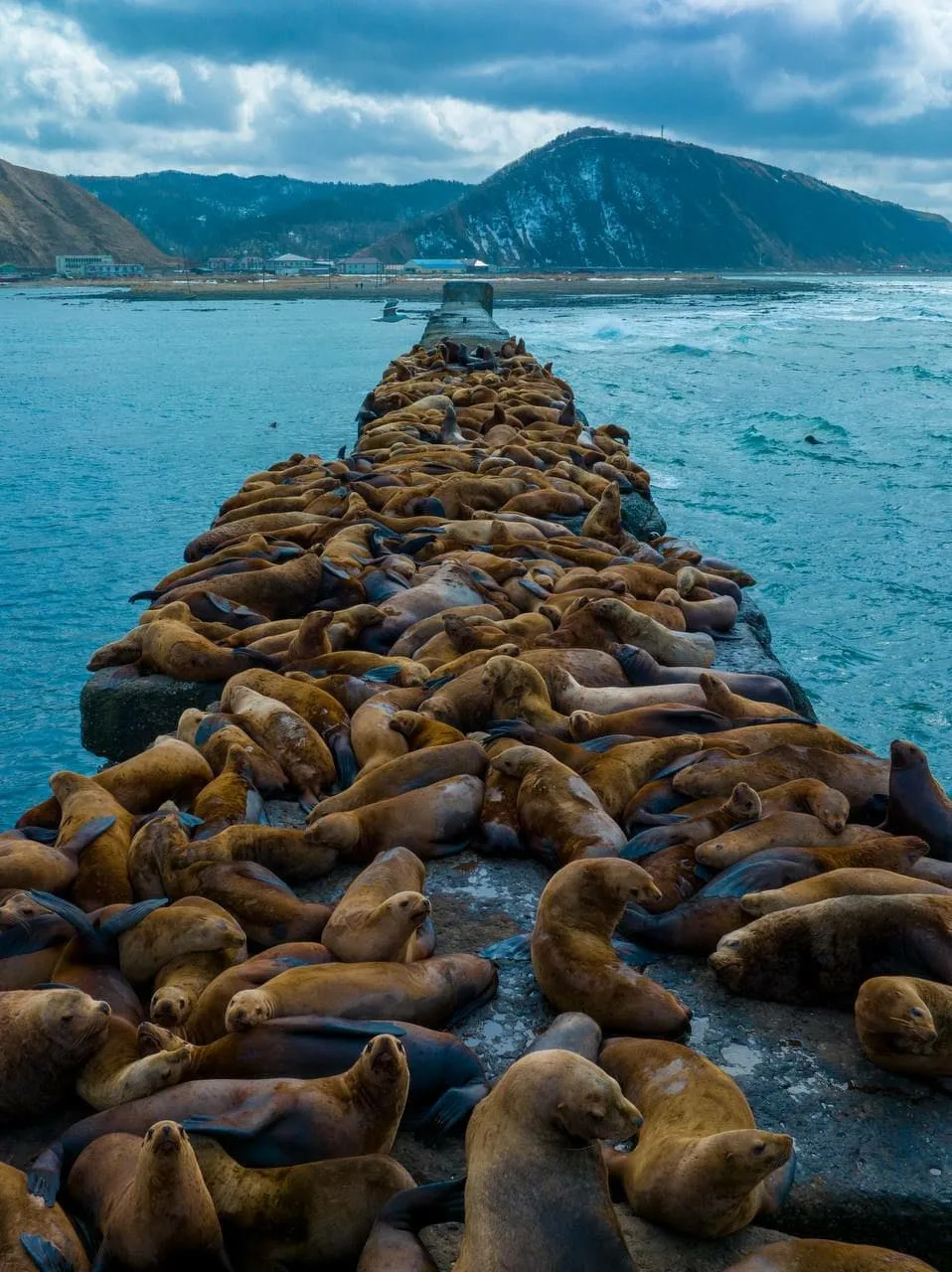
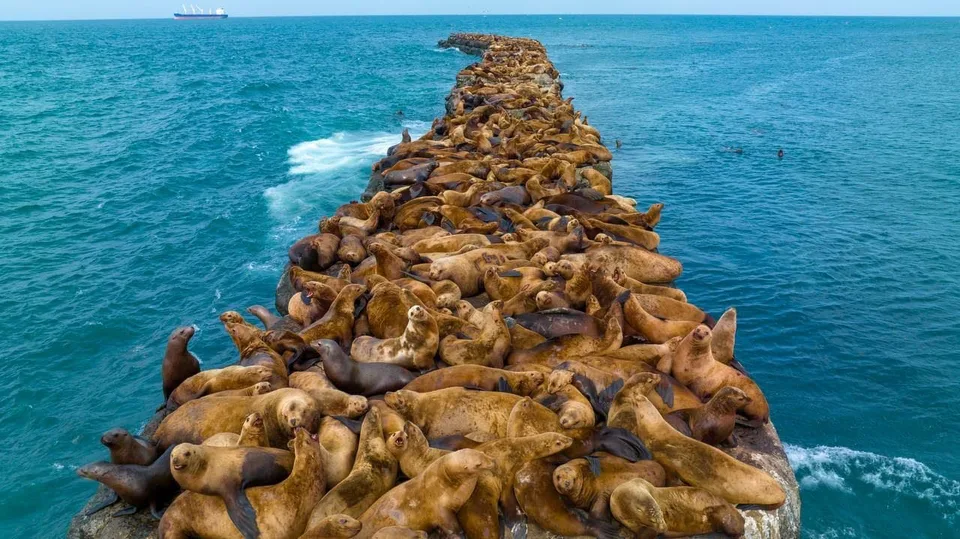
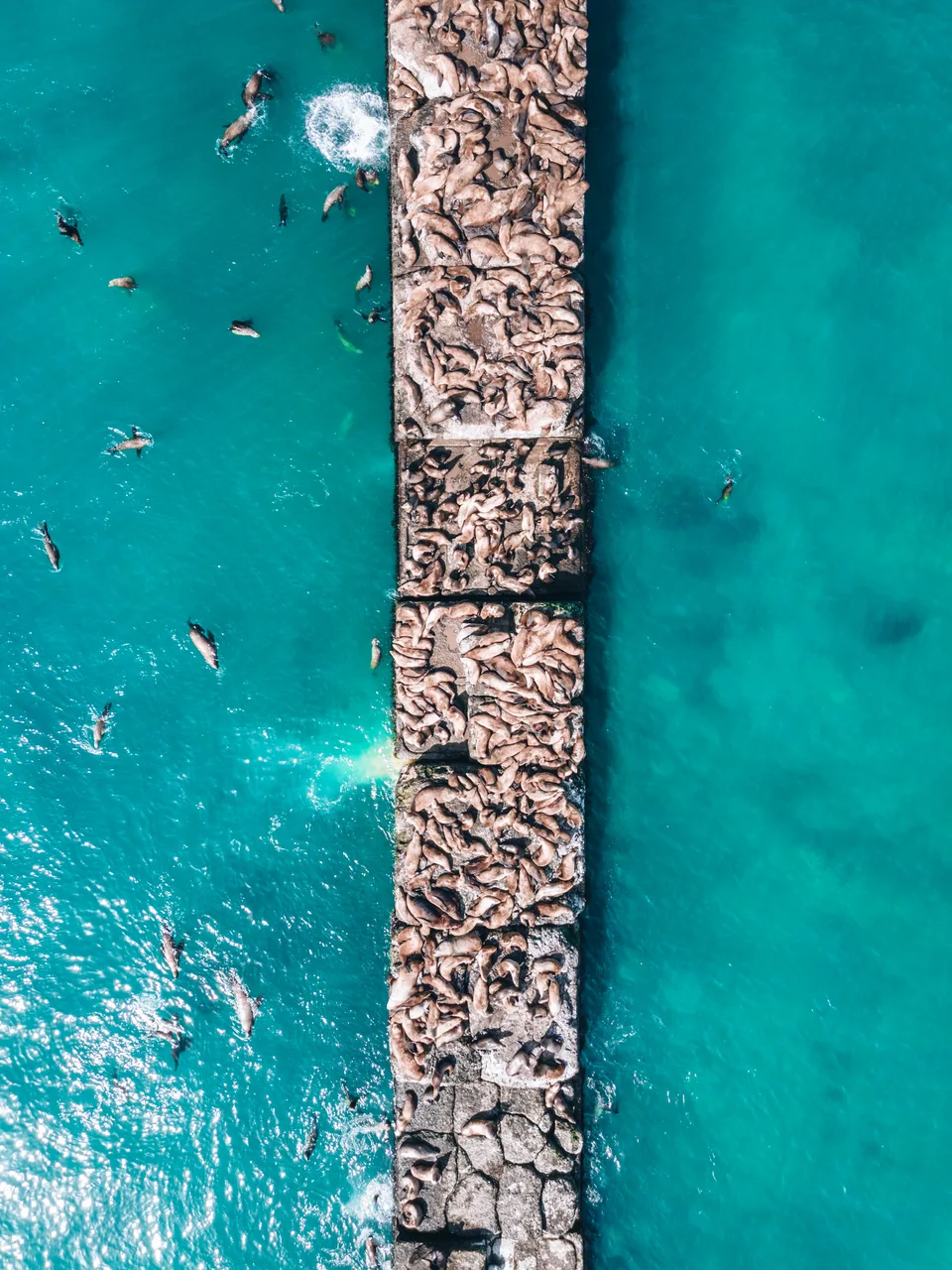
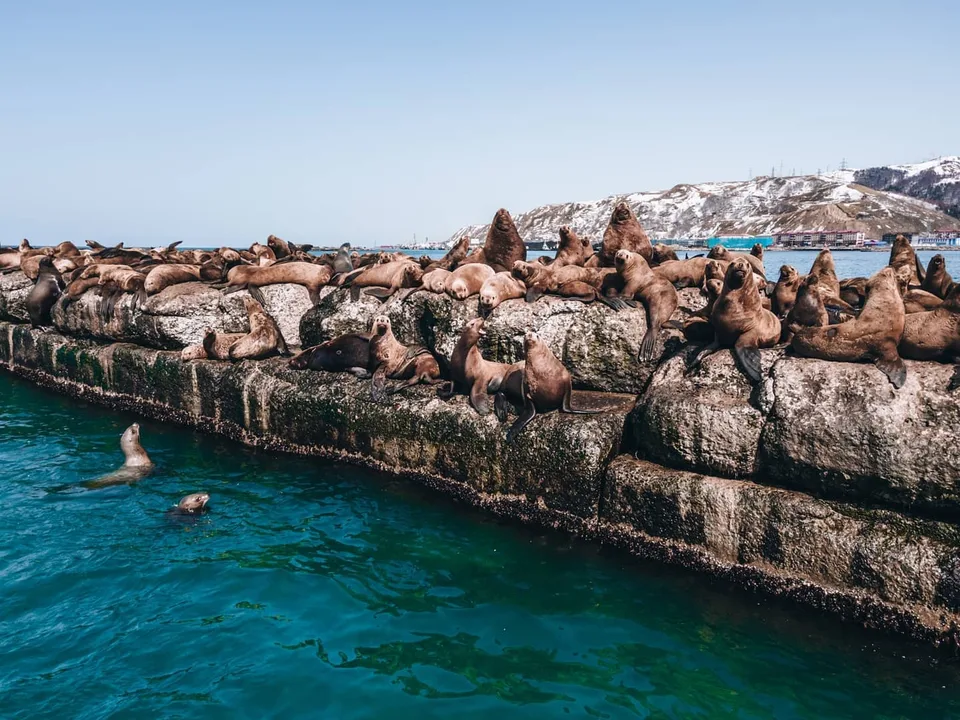
Steller sea lions began using the Nevelsk port structures in the late Soviet period, likely drawn by the reliable fish offloading from commercial trawlers. By the mid-2010s the colony had grown to a year-round presence of several dozen animals, peaking in autumn and winter when some individuals exceed 600 kg. The colony occupies floating pontoon platforms and fixed stone surfaces on the outer breakwater. Dominant bulls maintain territory through vocalisation and physical displacement — the sight and sound at close range, particularly October through February, is striking by any standard.
Adult male Steller sea lions can reach 3.25 m and weigh over 1,000 kg; females are markedly smaller at around 270 kg. The thick neck mane of adult males makes the lion comparison apt. Both sexes are present at Nevelsk year-round; pups have been observed on the platforms in some years, though the main breeding rookeries for this population are offshore on uninhabited rocks and islands.
What the excursion includes
We depart Yuzhno-Sakhalinsk mid-morning and reach Nevelsk in about 2 hours via the west-coast highway, passing the fishing town of Kholmsk and the Kholmsk Pass — in winter a snow-corniced mountain road worth the drive on its own. In Nevelsk we walk to the harbour observation zone, a freely accessible promenade where the breakwater platforms are visible from 15 to 30 metres. Our naturalist guide narrates the colony's behaviour, explains the biology of Steller sea lions and discusses the conservation status of the western population, classified as a Species of Special Concern under the US Endangered Species Act and monitored by the Sakhalin branch of the Pacific Research Fisheries Centre.
After the harbour we take a short walk through central Nevelsk — a modest Soviet-era fishing port rebuilt after the devastating 2007 earthquake — before a lunch of fresh fish and local seafood at a Nevelsk cafe. Return to Yuzhno-Sakhalinsk mid-afternoon.
Best times to visit
The colony is present year-round, making this the only AMIST Sakhalin excursion with no seasonal restriction. Numbers are highest from October to February, when non-breeding animals and young males congregate. The most dramatic encounters — large bulls vocalising and jostling for platform space — occur in this window. Summer visits are quieter but include juveniles and females. The observation promenade is accessible regardless of snow; winter visits add the spectacle of sea lions resting on ice-frosted platforms against a grey Sea of Okhotsk backdrop.
What makes it AMIST
This excursion is led by a naturalist guide with formal training in marine mammal biology, not by a general city-tour driver who mentions the sea lions in passing. We brief guests on responsible wildlife observation distances, explain why flash photography disturbs the animals, and contextualise the Nevelsk colony within the broader conservation picture of western Steller sea lion populations — which declined sharply in the late 20th century and are only now showing partial recovery across parts of their range.
Practical notes
- Season: Year-round. Peak colony numbers October through February.
- Duration: Approximately 7 hours including transfer, harbour observation (around 1 hour), town walk, lunch and return.
- Distance from Yuzhno-Sakhalinsk: Approximately 120 km each way via west-coast highway.
- Group size: 2 to 8 guests; private departures available.
- Included: Hotel pickup in Yuzhno-Sakhalinsk, return transfer, naturalist guide, harbour observation, town walk and lunch at a local cafe.
- Not included: Personal travel insurance; additional purchases at the cafe.
- To bring: Binoculars (detail rewards magnification), telephoto lens (200 mm or longer recommended), windproof jacket and warm hat in winter.
- Photography: No permits required. No flash photography near the colony.
Gallery
1 / 7
Upcoming departures
Choose a convenient date and book your spot
Loading dates…
Pricing
Season: 22.03 — 01.07.2026
| Тариф | Pricing |
|---|---|
| ВзрослыйСборная group | 1 500 ₽ |
| Ребёнок 5–12 летСборная group | 1 200 ₽ |
| Индивидуальный трансфер · СемейныйOptional to excursions | 19 000 ₽ |
| Индивидуальный трансфер · Родные and близкиеOptional to excursions | 23 000 ₽ |
| Индивидуальный трансфер · VIPOptional to excursions | 22 000 ₽ |
Transfer
| Тариф | Pricing |
|---|---|
| Семейный3 pers. | 20 500 ₽ |
| Родные and близкие4 pers. | 24 500 ₽ |
| VIP2 pers. | 25 200 ₽ |