Sakhalin
1 photo
Turquoise Blue Lakes (Near Marble Quarry)
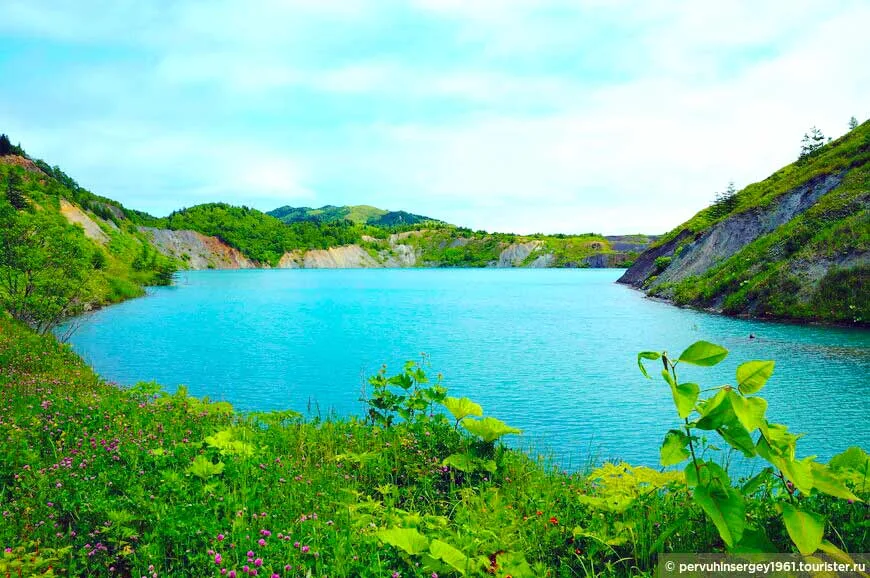
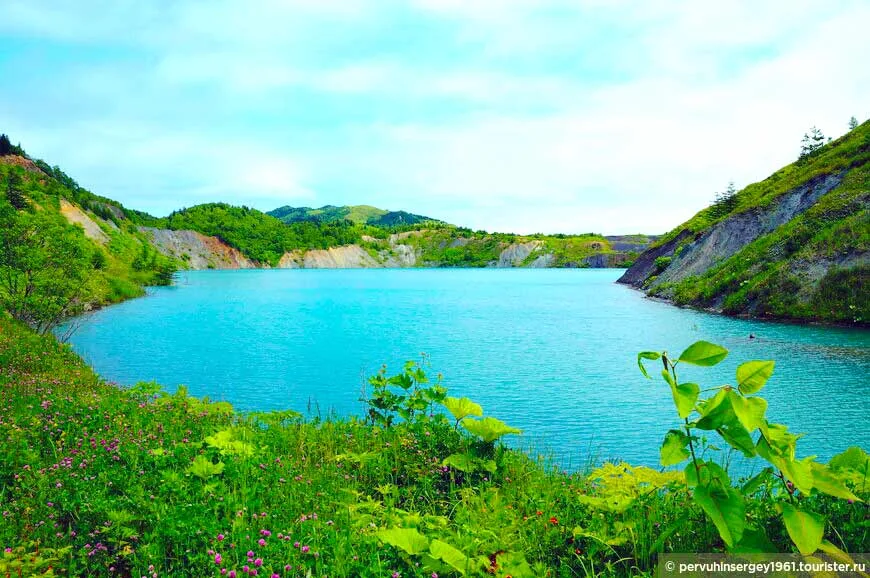
Flooded quarry pits in central Sakhalin: cobalt-blue water over 100 metres deep
Description
Tucked into a fold of central Sakhalin's forested hills, well away from any lighthouse or legend, the Turquoise Blue Lakes are water the colour of a swimming-pool advertisement, sitting in pits cut from rock veined with marble. They have no ancient mythology. That makes the impression sharper: a landscape that shouldn't be here, is.
Geology and industrial origins
The lakes occupy former quarry cells of a deposit worked through the Soviet era. By one account, the workings extracted germanium-bearing brown coal — semiconductor producers were keen buyers, but the germanium era ended quickly and the coal alone wasn't economic; by another, this was a marble quarry feeding facing-stone projects across the region. Either way, the outcome is the same: extraction stopped, the pits were left, and groundwater filled the voids.
The surrounding bedrock — predominantly dolomite and crystalline limestone marbled with calcite veins — releases dissolved calcium and magnesium carbonate ions into the water. Suspended calcite particles scatter short-wavelength light preferentially, generating the blue-green chromatic shift that has the first-time visitor reaching for a camera before the vehicle has stopped. The lakes are over 100 metres deep, and they freeze later than their neighbours — and not every winter all the way through.
What the visit is like
A short turn off the main road near Pugachevo runs onto a gravel track — a few kilometres of mixed boreal forest — and opens onto an old industrial clearing. The main lake is about 60 by 90 metres of water, its centre falling away to depths the eye can't read; that bottomlessness only sharpens the colour at the edges. A few minutes' walk away, a second smaller pit shifts from clear emerald in the shallows to milky turquoise where the bed drops, the hue rotating with the angle of the sun.
There is no infrastructure: no barrier, no lifeguard, no signboard. On a fine day you can swim, but the water is glacially cold and there is no easy step-in — few try. A circuit of the main lake takes around twenty minutes over uneven ground.
Practical information
- Access: From Yuzhno-Sakhalinsk via Pugachevo, about 80 km north; the final stretch is dirt, four-wheel drive recommended. AMIST builds the lakes into its southern Sakhalin jeep itineraries.
- Season: Late May through early September. The colour is at its strongest between 10:00 and 15:00 in direct sun.
- Time: An hour and a half on site for the walk and photography is enough.
- Safety: The pit edges are unconsolidated and can collapse; the drop to water ranges 4–12 m. Stay back from the cut lip.
- Bring: Boots that can take mud (the access road softens after rain), a wide-angle lens and a polariser — it kills surface glare and lifts the colour; insect repellent in July–August.
The honest version
The Turquoise Lakes are on no UNESCO list and in no guidebook. They simply sit in their palette, in daylight, and turn out to be more blue than the eye is willing to grant. AMIST programmes them as a deliberate counterpoint to the volcanoes and the coast — evidence that Sakhalin's industrial past left more than rust, including one quietly extraordinary spot. Best at midday, with as small a group as possible: even three people change the scale of the frame.
Gallery
1 / 3
On the map
Want to see Бирюзовые озёра?
We will arrange an excursion to this and other attractions