
Sakhalin
8 photos
Busse Lagoon
A 40-km² brackish lagoon on Sakhalin's southeast — forearm-sized oysters and the first Russian post on the island
Description
A flat sheet of brackish water hooked into the south-eastern shoulder of Sakhalin, Busse Lagoon is half lake, half ocean — and almost entirely oyster.
Named for the first Russian commander of Sakhalin
The lagoon takes its name from Major Nikolai Vasilyevich Busse, an officer of the Amur Expedition (1849–1855) led by Gennady Nevelskoy and the first Russian commander of Sakhalin. After his death, his Sakhalin diary was published — one of the earliest Russian-language accounts of the island's colonisation. Cartographers attached his name to the lagoon his expedition had charted.
Geographically Busse is not a lake at all but a coastal lagoon: roughly 40 km² in area, 9 km long and up to 4.5 m deep, separated from Aniva Bay and the Sea of Okhotsk by a sandbar and connected to the open sea by a single narrow channel known as the Suslov Pass. Catchment area is 478 km²; the principal inflow is the Sheshkevich River, with the Arakul stream entering from the north-west. The villages of Beregovoye and Muravyovo sit on the shore.
The story of one post
In 1867 the second Muravyov Post was established at the mouth of the Sheshkevich on the eastern shore — the first, on the site of present-day Korsakov, had been withdrawn during the Crimean War. The main inconvenience of the Busse post, locally called the "12-foot harbour", was the limited depth: heavy vessels could not approach for unloading. After Sakhalin came fully under Russian administration in 1875 the post was closed again and moved back to its earlier location at Kusunkotan. From 1905 to 1946, when the southern half of the island was Japanese, the lagoon was called Tobuchi. It has been a regional natural monument since 1977; in 2020 it received the status of a nature park.
What the visit is like
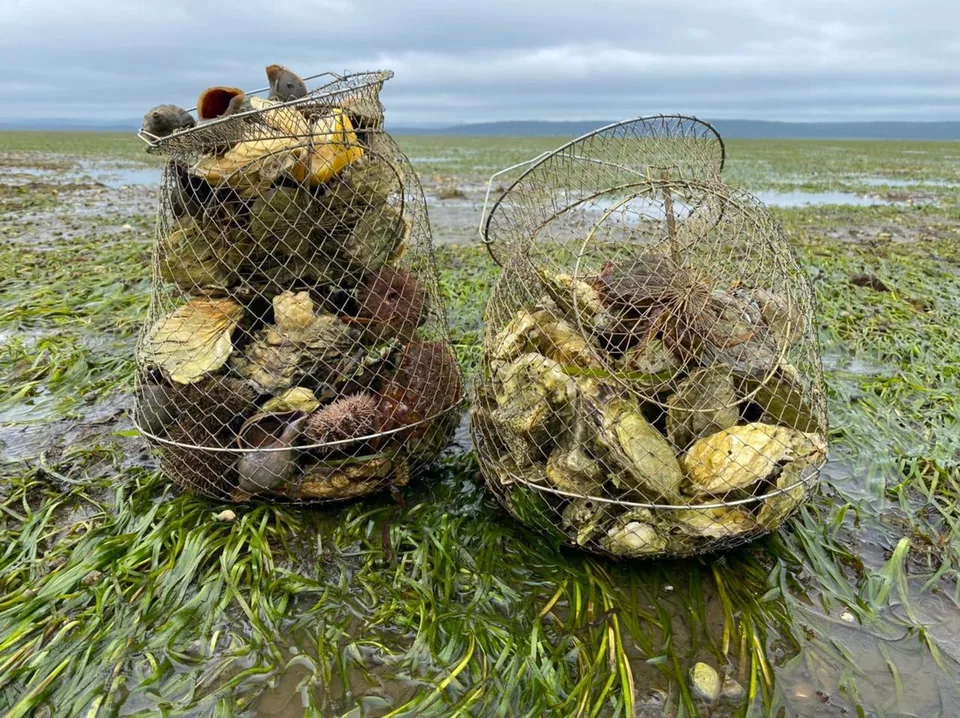
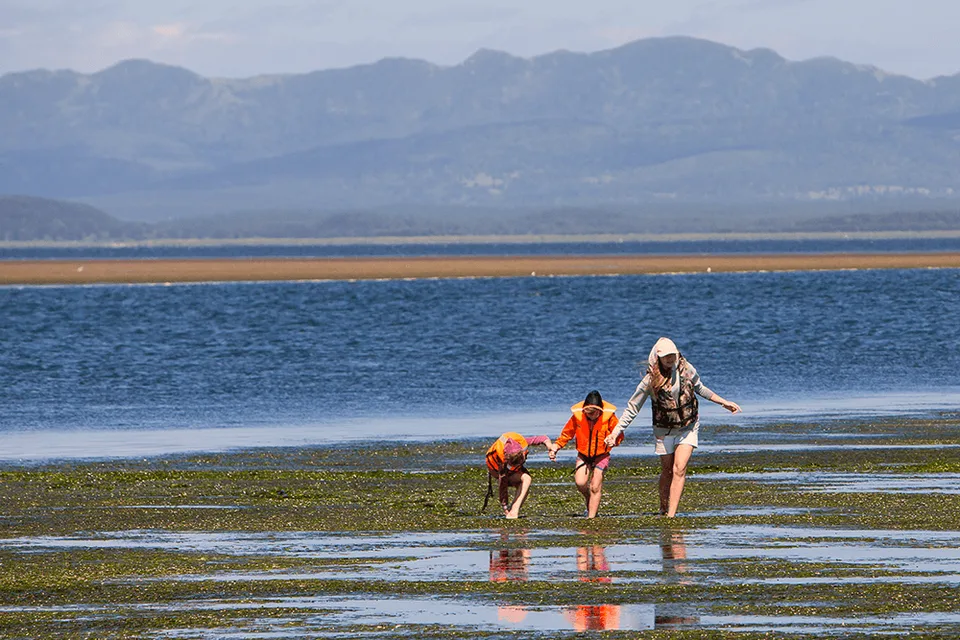
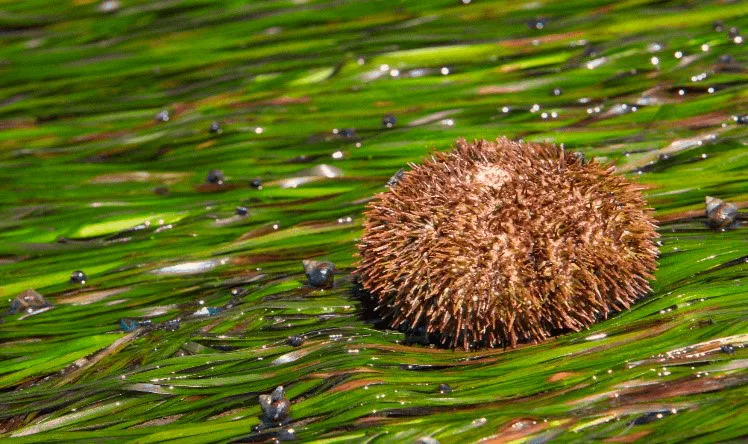
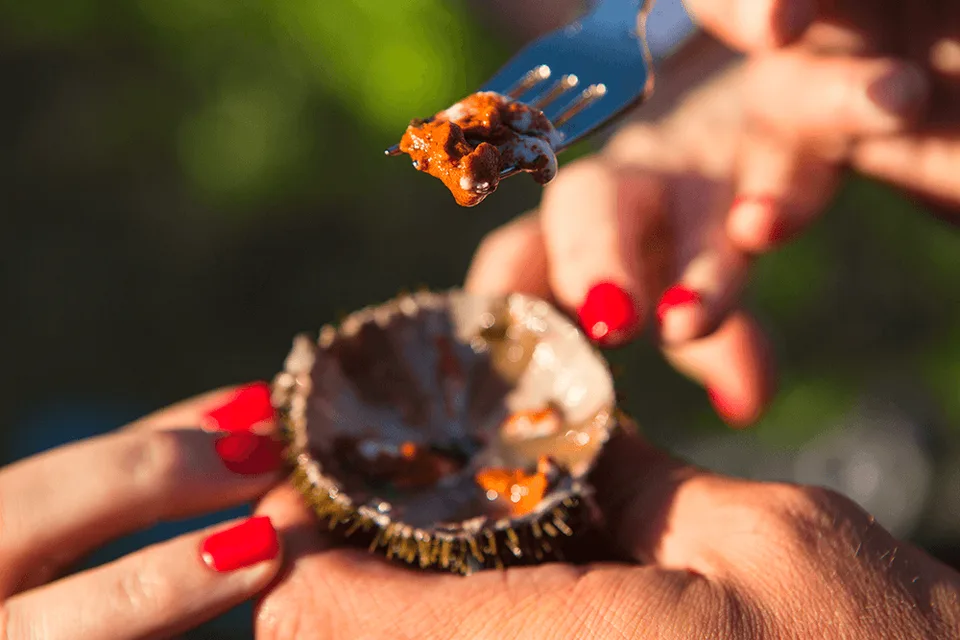
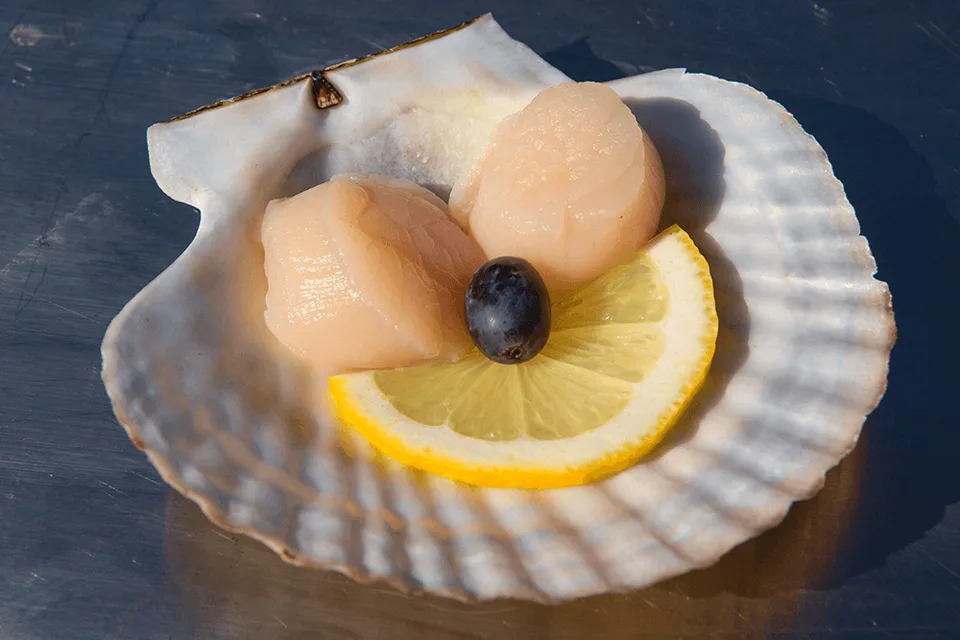
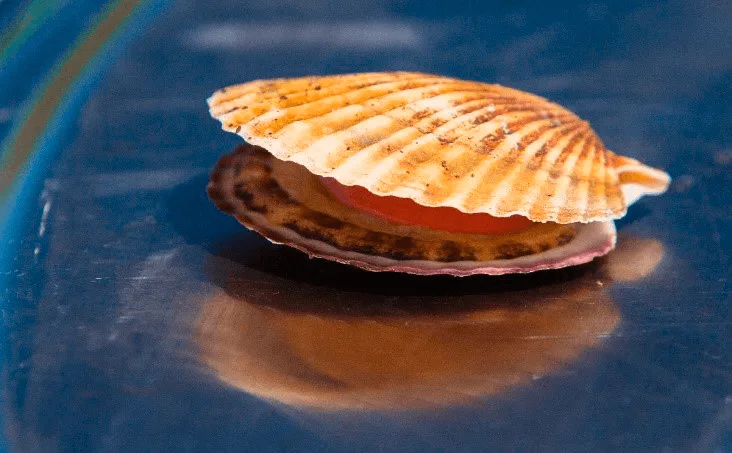
At low tide the eastern banks reveal beds of the giant Pacific oyster (Crassostrea gigas), shells the length of a forearm and weighing well over a kilogram. Local guides shuck them on the shore with a short blade and a squeeze of lemon; the meat is cold, briny, and so dense it takes two bites. Beyond oysters, the lagoon supports scallops, sea cucumbers, sea urchins, mussels, smelt, herring and several Pacific salmon runs — a near-complete catalogue of Russian Far East shellfish in one shallow bay. Of the algae, the lagoon yields commercial Ahnfeltia — the raw material for agar.
Practical information
- Transfer: Roughly two hours by road from Yuzhno-Sakhalinsk via Korsakov (about 110 km), then a final stretch on a graded coastal track. Included in our day-tour pricing.
- Best season: Late June through September. Cooler shoulder days are often clearest; the lagoon almost never sees fog.
- On site: Wading the oyster banks at low tide (waders or rubber boots essential), shore-side shucking and tasting, lagoon boat crossing, hot fish soup.
- Ethics: Busse is a regional nature park; oyster harvest is quota-controlled. We work only with licensed local operators.
Sakhalin on the tongue
Busse is the most direct way to taste Sakhalin: a single afternoon links 19th-century Russian colonial history, a textbook coastal lagoon and an oyster the size of a paperback. AMIST has paired the lagoon with the sea route to Cape Aniva since the mid-2000s — guests who want both the lighthouse spectacle and a gastronomic anchor commonly run the two on consecutive days. Our captains hold the group to six and refuse harvest from banks that have not had time to recover.
Gallery

1 / 8
On the map
Want to see Лагуну Буссе?
We will arrange an excursion to this and other attractions