Sakhalin
2 photos
Steller Sea Lion Rookery, Nevelsk
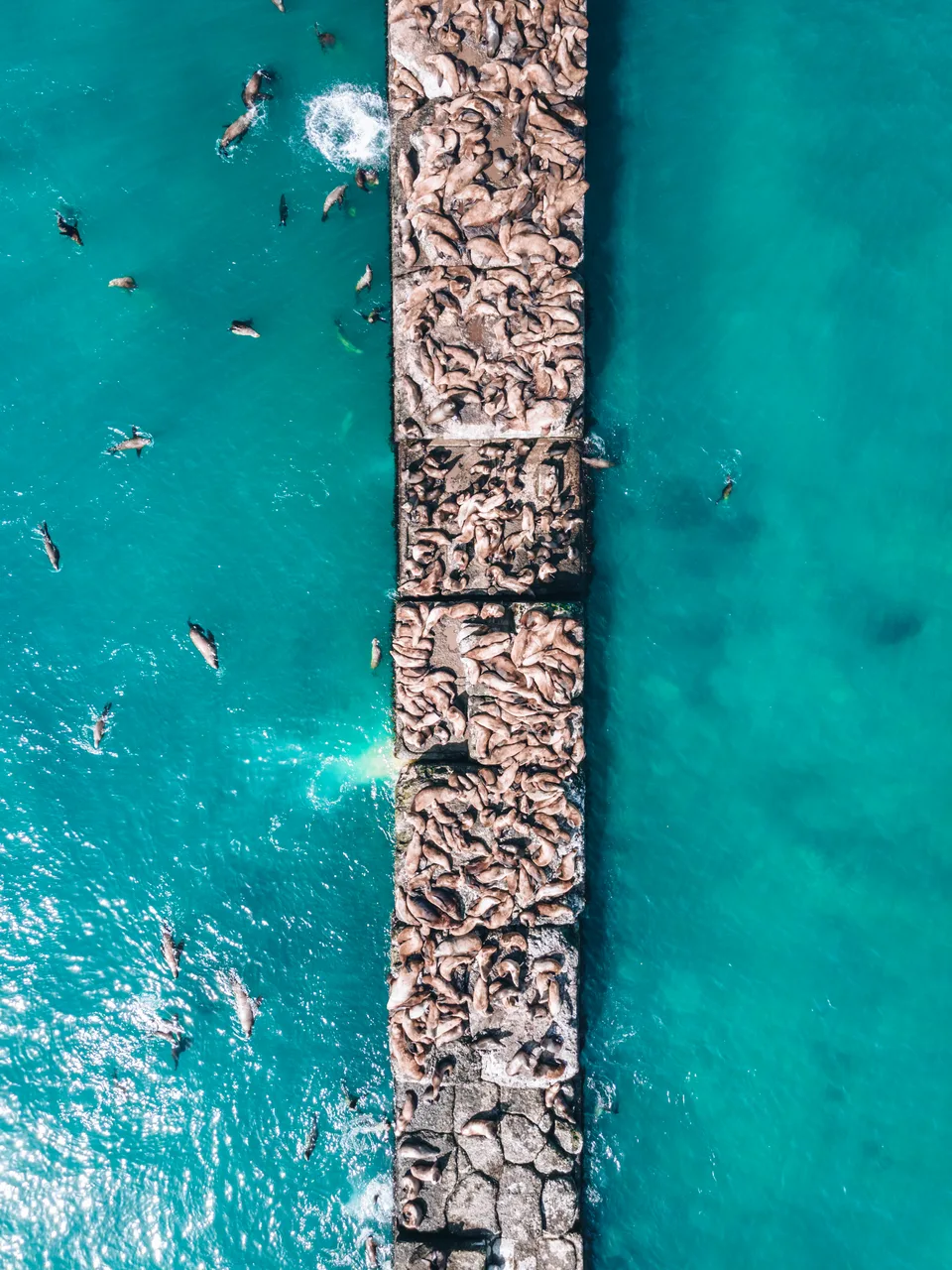
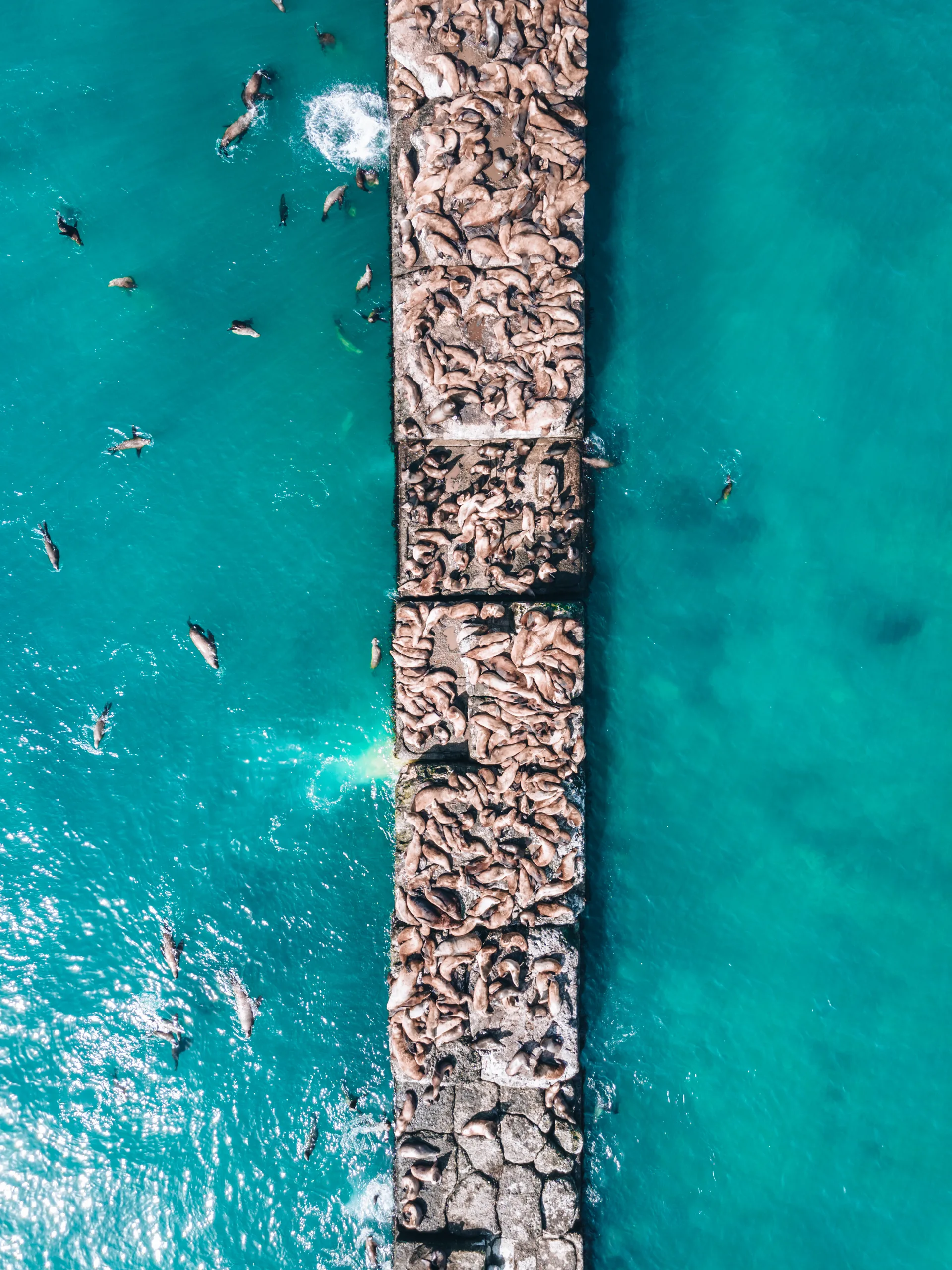
Up to 800 Steller sea lions on the working breakwater of Nevelsk port — a year-round, urban-scale haul-out
Description
On the concrete quays of an ordinary working port in southern Sakhalin, hundreds of Steller sea lions have decided to stay — permanently. The Nevelsk rookery is one of the most accessible large marine-mammal haul-outs in Russia, and the animals are entirely unbothered by ships, traffic, or quiet admiration of visitors standing twenty metres away on the harbour wall. The Steller sea lion is the symbol of Nevelsk and appears on the town's coat of arms; only three working ports in the world host a colony at this scale — Nevelsk, Seattle and Petropavlovsk-Kamchatsky.
The colony and the place
Nevelsk (population roughly 10,000) is a fishing and cargo port on Sakhalin's south-western coast, facing the Tatar Strait. The harbour breakwater — a concrete structure built during the Soviet era — turned out to be an ideal haul-out for Steller sea lions (Eumetopias jubatus, sivuchi in Russian): above waterline, structurally solid, sheltered from the dominant south-west swell, and conveniently close to the rich fishing grounds of La Pérouse Strait. The colony became established in the 1990s and has grown steadily; recent counts record between 500 and 800 animals depending on season, making it one of the largest urban sea lion congregations in the world.
Steller sea lions are the largest of the eared seals — adult bulls reach 3 metres and weigh over a tonne. At Nevelsk you see the full social spectrum: silverback males holding their ground against younger challengers with deep, resonant roars; sub-adult males practising bluff charges; females with pups tucked among larger bodies; juveniles playing in the water alongside the quay. The noise — a permanent, building-filling bass rumble punctuated by explosive barks — carries across the whole harbour.
Why this colony is here year-round
Most Steller sea lion rookeries on the Russian Pacific coast are seasonal, peaking in summer when breeding concentrates animals on rocky offshore islands. Nevelsk is the exception: the concrete wall offers better winter-storm shelter than natural reefs, and the La Pérouse Strait fishery — cod, herring — feeds the colony all year. Numbers peak November through February. Working port traffic does not disturb the animals; ships pass within 200 metres and the colony does not move.
Viewing conditions
The main viewpoint is the public quayside walkway on the north side of the breakwater — a flat, railed path with the nearest hauled-out animals 20 to 40 metres away. No permit is required; access is free. An 8×42 binocular is enough to read individual behaviour; a 200 mm lens is comfortable for photography, while a 400 mm separates a single subject from the concrete background. Morning sun lights the breakwater face from the east, roughly 07:00 to 11:00.
Winter visits (November–February) give the strongest experience: larger numbers, active male confrontations, late-season pups still nursing. Summer (June–August) is milder but with some animals dispersed on offshore feeding grounds, and the haul-out is smaller.
The town context
Nevelsk was damaged by a magnitude-6.2 earthquake and the resulting tsunami in August 2007; the port has since been rebuilt and the sea lions returned quickly. On clear days the mainland Russian coast is just visible from the breakwater — Sakhalin is only 7 km from the continent at its narrowest.
Practical information
- Location: Port of Nevelsk, south-western Sakhalin. About 100 km from Yuzhno-Sakhalinsk via the A-393 highway, 1.5 hours.
- Season: Year-round; peak numbers November–February.
- Access: Public quayside walkway, free. Flat ground, suitable for guests of any fitness level.
- Time on site: 45 minutes to 1.5 hours depending on animal activity.
- Pairing: Combines with Cape Krilon, Sakhalin's southern tip 60 km further, into a full southern-Sakhalin day; or as the afternoon stop on a half-day route from Yuzhno-Sakhalinsk.
- Bring: Binoculars; a windproof shell (the harbour faces the Tatar Strait with no shelter); ear protection optional, but the breakwater is genuinely loud.
Wildlife without the long approach
Wildlife viewing on Sakhalin usually requires a boat, a permit or a long off-road approach. Nevelsk needs none of them: park, walk 200 metres to the public quayside, and stand at eye-line with creatures the weight of a small car. AMIST programmes this stop into our southern-Sakhalin day routes for guests who want a direct wildlife experience without the long approach. We know the corner of the breakwater where the afternoon light falls on the dominant bulls, and we time the visit for the 14:00–16:00 "shift change".
Gallery
1 / 1
On the map
Want to see Steller Sea Lion Rookery, Nevelsk?
We will arrange an excursion to this and other attractions