Sakhalin
4 photos
Aniva Lighthouse
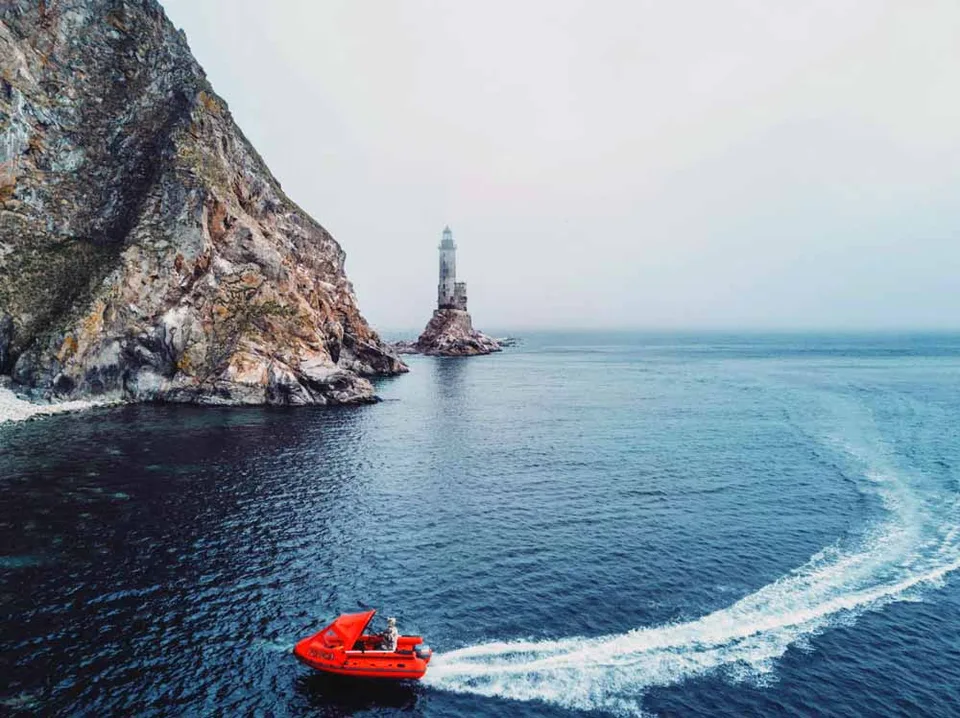
A Japanese 1939 concrete tower on Sivuchya Rock off Cape Aniva — reachable only by sea
Description
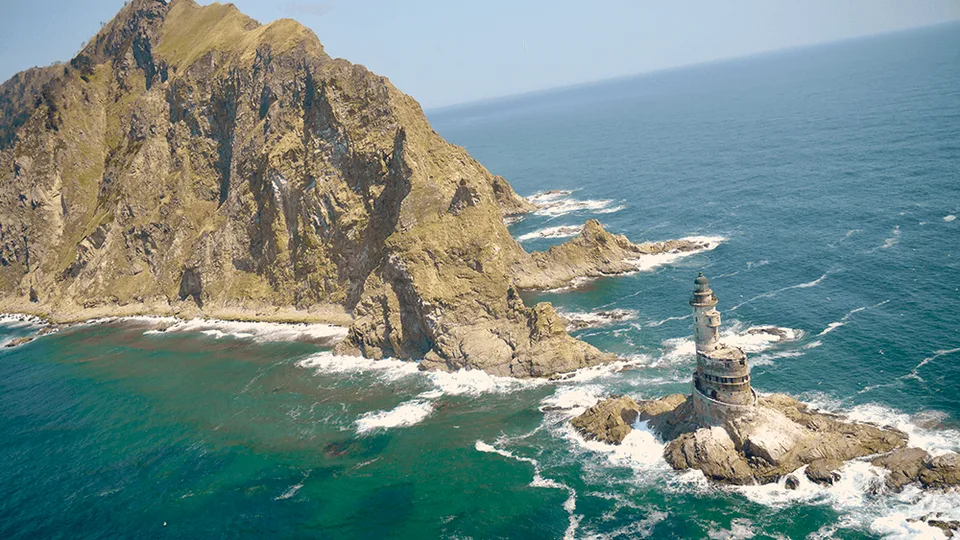
A 31-metre concrete sentinel rising from a fist of wave-sprayed rock, Aniva Lighthouse is Sakhalin's most otherworldly landmark — and the only way to reach it is by sea. It is regularly named among Russia's ten most enigmatic destinations.
A beacon built by Japan, abandoned by the atomic age
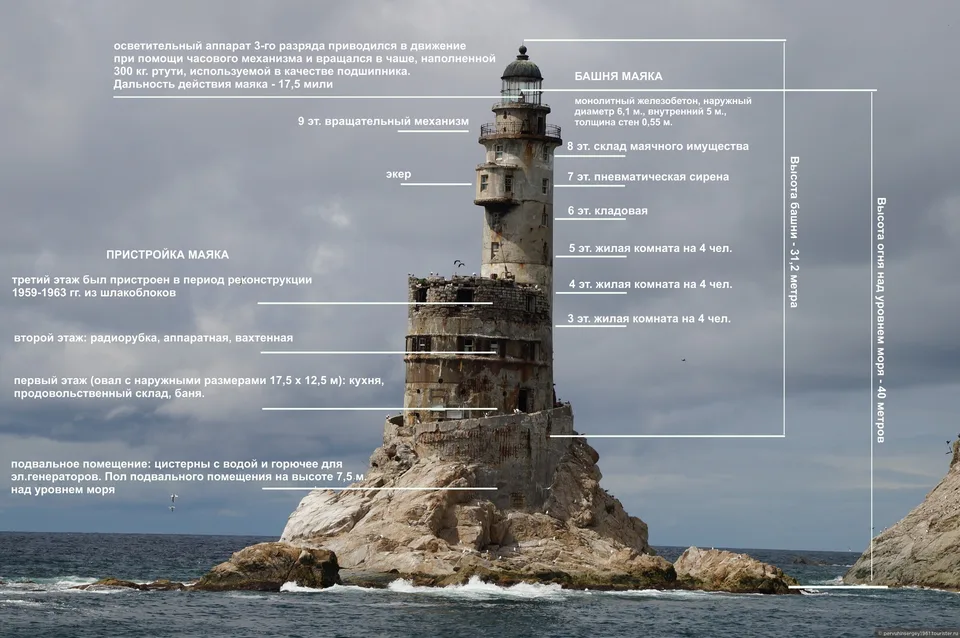
Completed in 1939 during the Japanese Karafuto era under engineer Shinobu Miura, Aniva was conceived as a technical triumph: a circular nine-storey reinforced-concrete tower with a side annexe on an oval base, 31 metres tall, with a light 40 metres above sea level and a beam reaching 30 km across the Sea of Okhotsk. Until 1946 the cape was known by its Japanese name Nakashiretoko-misaki; the present name comes from the bay. The concrete colour barely differed from the rock — the structure read as part of the cliff.
The basement held the diesel generator and battery room; the first floor — kitchen and provisions; the second — radio room and watch; floors three to five — living quarters. A central shaft carried a pendulum: a 270-kilogram weight, wound every three hours, drove the optical system. Until 1949 the village of Shiretoko stood on the cape itself, with a population of around 4,800 including the lighthouse staff.
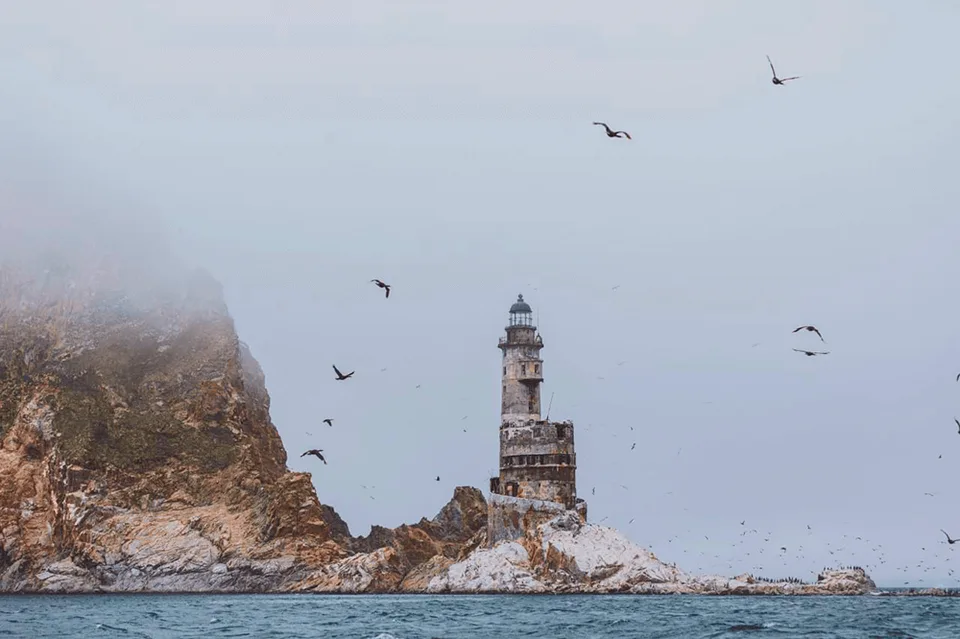
In 1990 the Soviet Navy replaced conventional power with a Strontium-90 radioisotope thermoelectric generator (RITEG) — autonomous "indefinite" power for one of the empire's most remote keeping stations. By 2006 the atomic battery had spent itself, and a replacement was not installed: satellite navigation had rendered the beacon redundant. The light has not been lit since. The isotope units were removed and the lighthouse sealed. There has been no permanent staff since 1990; the tower is now polished only by salt aerosol and streaked by seabird colonies.
Beyond rotating-shift remodellings, Soviet builders pushed steam heating through the load-bearing walls and added a concrete superstructure on the third floor — both accelerated the building's decay. The original nautophone, an acoustic fog signal, was dismantled in the 1950s; the 1950s–1960s electric replacement was eventually removed too.
What the approach is like
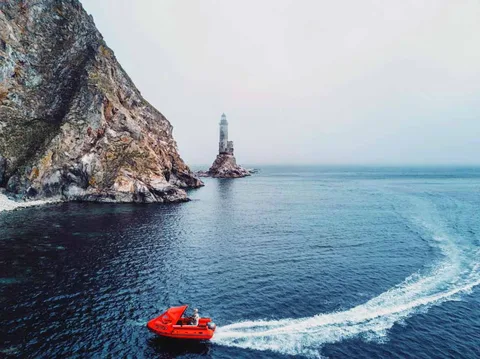
From the fishing village of Novikovo the voyage takes around 90 minutes one way across Aniva Bay, hugging the south-eastern Sakhalin coast. Steller sea lions haul out on the rocks along the way, and in early summer the sea is often a flat pewter mirror. The final approach tightens — the lighthouse throws its shadow across the water long before you can make out the rusted door and the narrow concrete steps rising from sea level to the first keeper's landing.
The interior is off-limits — stairs and floors are in poor condition, the original access ladder is gone, and the climb up the rock is risky. The experience is on the water: our skipper holds position for 20 to 30 minutes, close enough to read the inscriptions above the doorway.
Practical information
- Best season: Late June through early September. Fog and swell can still cancel departures — AMIST rebooks without charge.
- Getting there: A three-hour transfer from Yuzhno-Sakhalinsk to Novikovo is included in our guided programmes.
- Time on site: 20–40 minutes circling the rock, depending on conditions.
- Bring: Windproof layer, polarised sunglasses, a 70–200 mm zoom for close details. No shore landing.
A frame that won't shoot through glass
Aniva is the kind of place that doesn't photograph well through glass. It has to be circled slowly, at wave level, in the narrow weather window nature chooses to grant. AMIST has been running the Novikovo–Aniva route since 2007 — before most guests saw the first viral drone shots from above. Our skippers know when to push and when to turn back, and we keep groups small so nobody loses their angle to a crowd.
Gallery
1 / 4
On the map
Want to see Aniva Lighthouse?
We will arrange an excursion to this and other attractions