
Sakhalin
5 photos
Cape Evstafiy
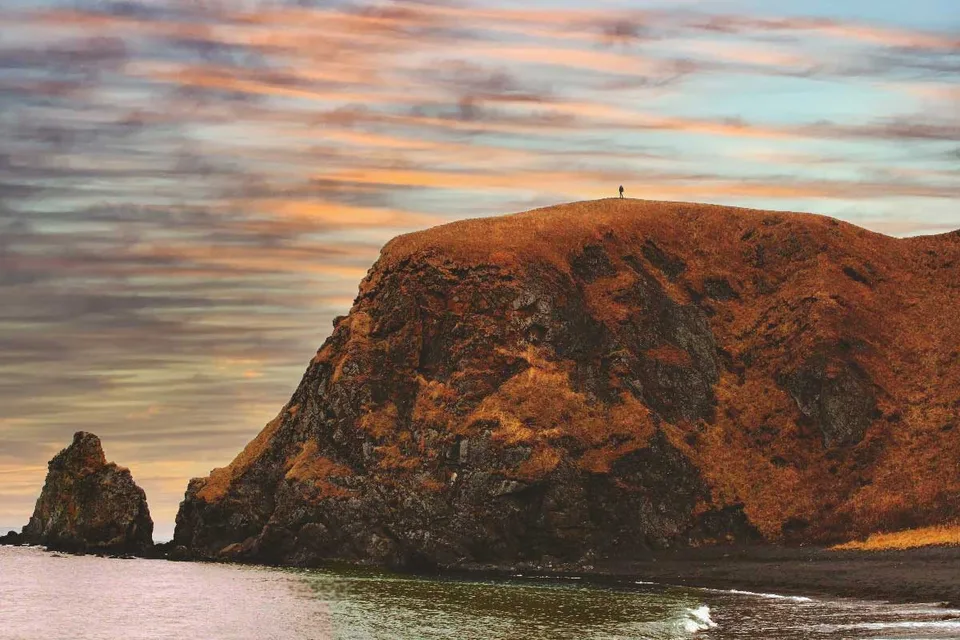
A cliff-edged cape on Sakhalin's southeast coast — a 51-metre drop, a thin neck of land and the Sea of Okhotsk to the horizon
Description
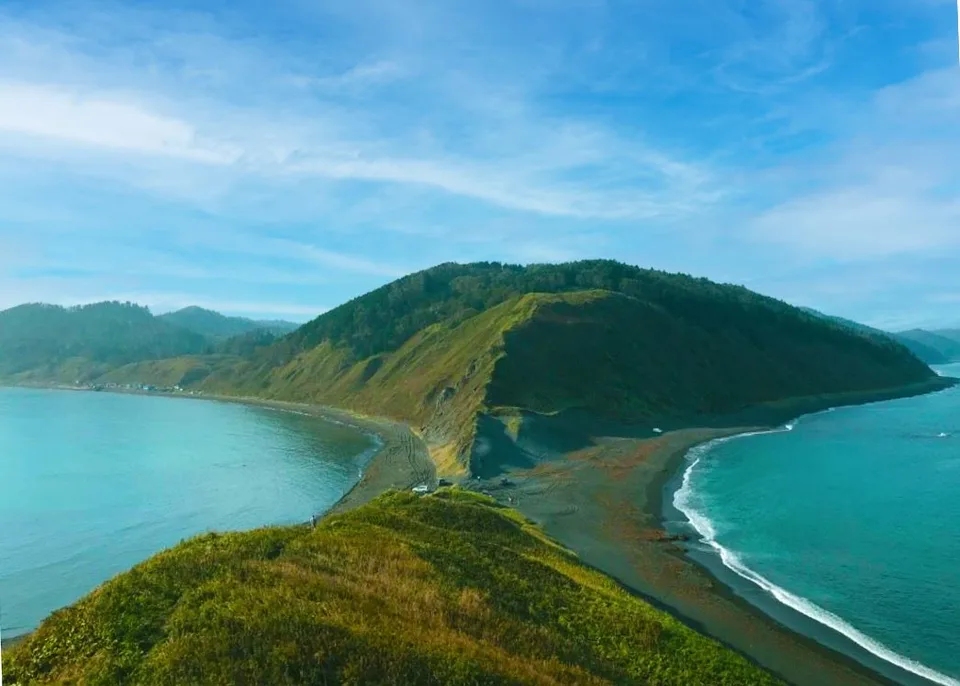
A 51-metre cliff-headed cape tethered to Sakhalin by a thin neck of land, Cape Evstafiy is the theatrical climax of the southeast coast — and the natural end-point of our most popular jeep day from Yuzhno-Sakhalinsk.
A name from the age of sail
The cape was named in 1805 by Ivan Krusenstern during the first Russian circumnavigation, on the sloop Nadezhda. One reading attributes the name to the Great Martyr Eustathios Plakidas; another to the line-of-battle ship Sviatoy Evstafiy, lost in 1770 at the Battle of Chesma after boarding the Turkish flagship — one of the storied feats of the Russian Imperial Navy. Both readings are equally plausible; the chart kept the name without a footnote.
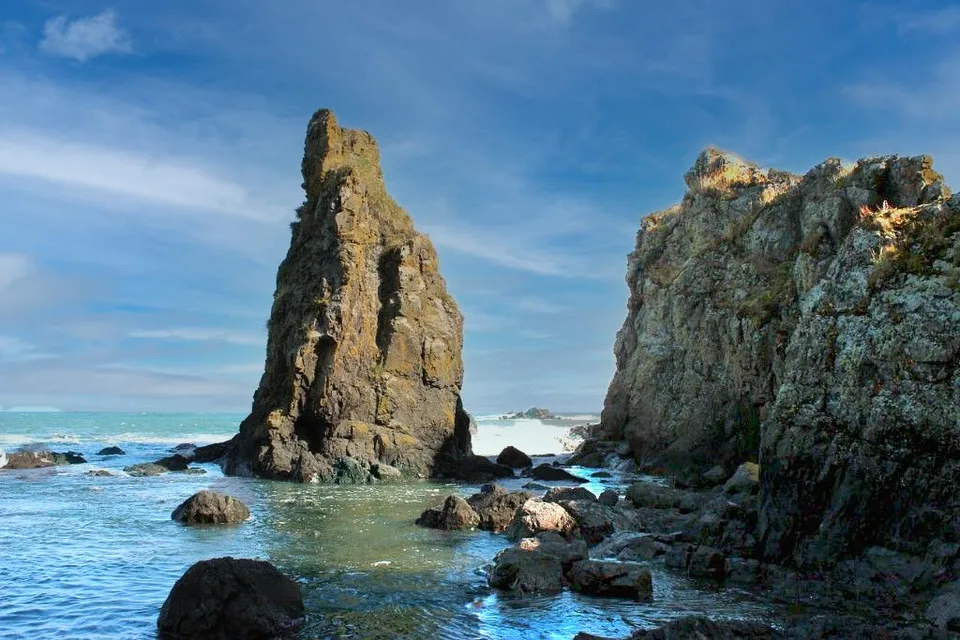
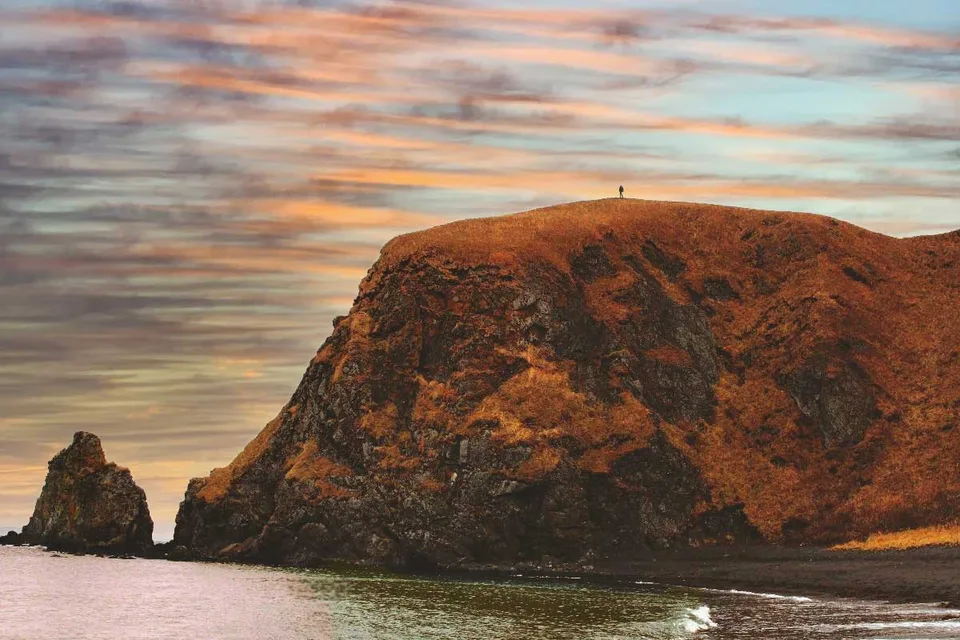
The headland itself is tied to the main island by a low, narrow and abrupt isthmus; standing on its sharp ridge gives the phrase "edge of the world" a physical meaning. Sea stacks below the cliff hold nesting seabirds, and dense coastal scrub presses to the very brim. The Korsakov District lists the cape as a regional natural landmark and recommends visits from late May through October.
The drive
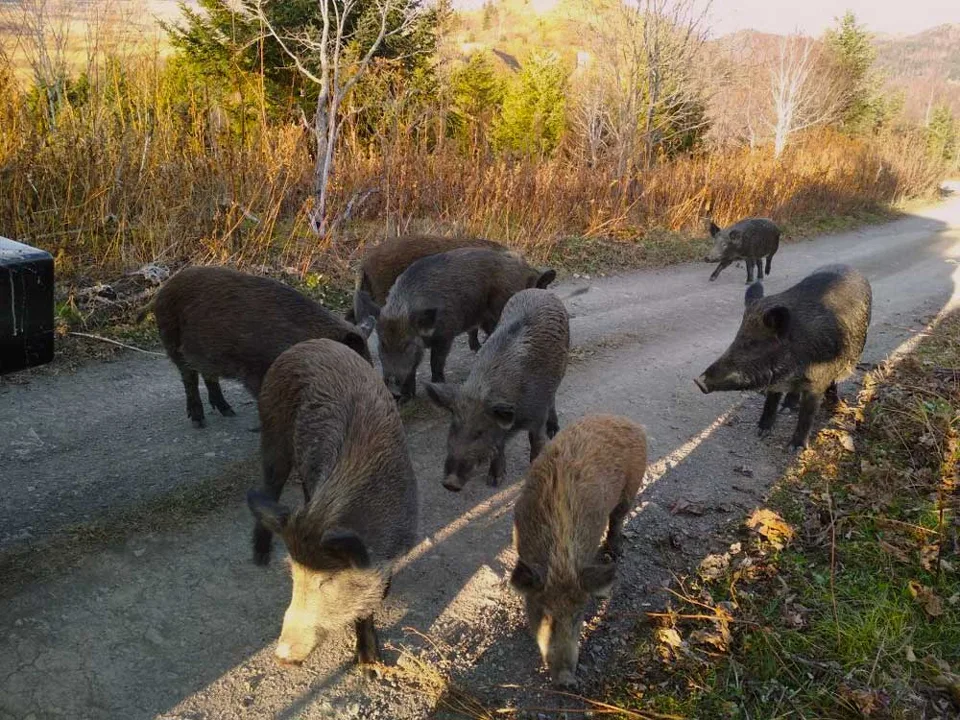
You cannot drive to Evstafiy. The full route is about 150 km; the final twenty are the reason the trip exists. We head south from Yuzhno-Sakhalinsk through Korsakov and on to the fishing village of Novikovo, then turn east onto an old jeep track along the coast. Along the way the route opens onto Busse Lagoon — the saltwater lake famous for its wild Sakhalin oysters, which locals shuck on the spot — and the flooded Turquoise Lakes of the old Novikovo coal pit, startlingly blue against black spoil. Foxes regularly cross the track; the Tonino-Aniva Peninsula carries a population of wild boar, and meeting them in the undergrowth in summer is unremarkable.
On the cape
The final approach is a short walk from the vehicles across the isthmus; on the far side the land falls away sharply and the Sea of Okhotsk opens to the horizon. Most groups spend an hour or two on the cape: walking the rim, photographing the sea stacks, and — with luck and quiet feet — watching the birds on the cliff ledges. There are no barriers, no boardwalks, no kiosks. The best window is a clear afternoon: low light runs along the cliff face and lights the nesting shelves.
Practical information
- Season: Late May through October. Swell and rain soften the track; AMIST reschedules without charge.
- Drive: A full day from Yuzhno-Sakhalinsk via Korsakov and Novikovo in 4WD, usually paired with Busse Lagoon and the Turquoise Lakes.
- Time on site: 1–2 hours on the cape, plus stops for oyster tasting and the lakes.
- Bring: Waterproof boots, windproof layer, polarised sunglasses, a tele lens for the birds; insect repellent in summer.
One jeep loop, three landscapes
Evstafiy is one of the few south-east-coast destinations where a wild cliff cape, an oyster lagoon and post-industrial flooded lakes can all be linked in a single jeep loop. AMIST has worked the Novikovo corridor since the early 2000s; we know which section turns to mud after rain, which tide opens the oyster banks cleanly, and the hours when the light reads best on the cliff. The convoy stays at two vehicles, six to eight guests, so the path across the isthmus stays narrow and the birds stay on the rock.
Gallery
1 / 5
On the map
Want to see Cape Evstafiy?
We will arrange an excursion to this and other attractions