Sakhalin
1 photo
Cape Slepikovsky
A working 1934 Japanese lighthouse on southwest Sakhalin — operating for more than ninety years
Description
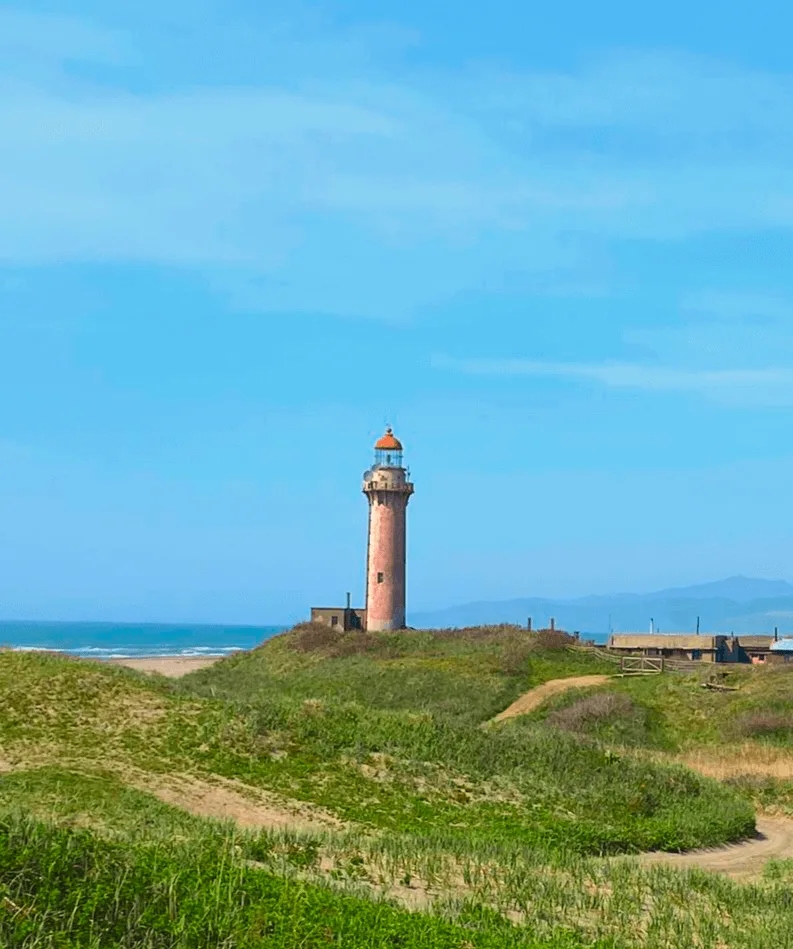
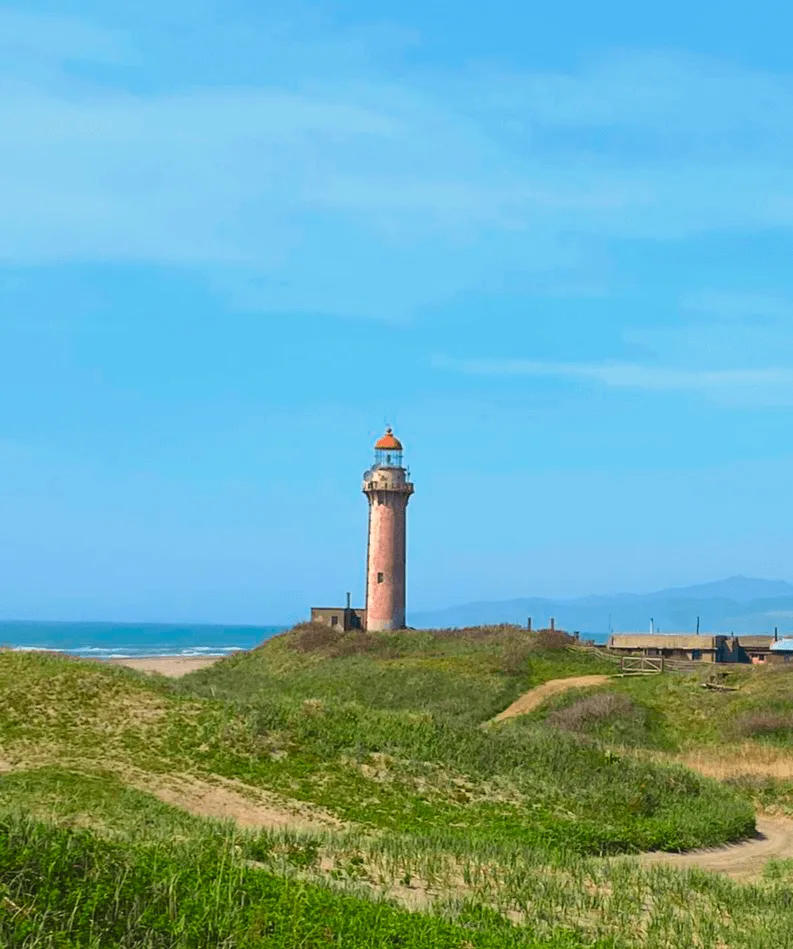
Cape Slepikovsky carries something rare in the Sakhalin lighthouse inventory: a 1934 Japanese-built tower that has been guiding ships continuously for over ninety years. While Aniva stands silent and Krilon has been repeatedly rebuilt, Slepikovsky's light still sweeps the Sea of Japan each night.
The setting
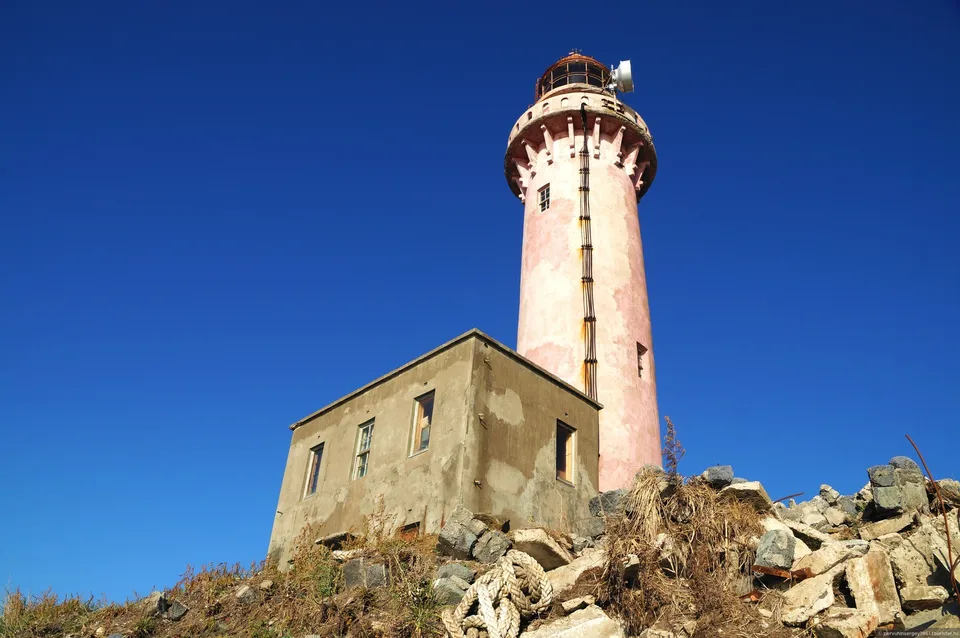
The cape is a regional natural monument on Sakhalin's south-western coast, marking the northern edge of Nevelsk Bay; administratively it sits within the Kholmsk Urban District of Sakhalin Region. The lighthouse was built in 1934, when the southern half of Sakhalin was Karafuto Prefecture. The tower is 27 metres high. It is a near-twin of the lighthouse at Cape Lamanon — a round tower, as on most Japanese-era Sakhalin lighthouses, linked by corridors to ancillary and living quarters. A signature feature of the complex is its rainwater system: gutters in the roofs feed filtered water down into underground concrete tanks for technical and food use.
A lighthouse that was never switched off
The lighthouse was built to mark the western Sakhalin corridor for vessels in the Sea of Japan shipping lanes — a route connecting Karafuto's ports with the Japanese mainland and the wider Pacific network. After 1945, when southern Sakhalin came under Soviet administration, the lighthouse stayed in service; later it transferred to Russian management. That continuity is unusual. Most Karafuto-era buildings on the island were demolished, repurposed or left to decay. Slepikovsky kept burning — through changes of administration, the Soviet collapse and into the 21st century: a quiet example of practical utility outlasting political eras.
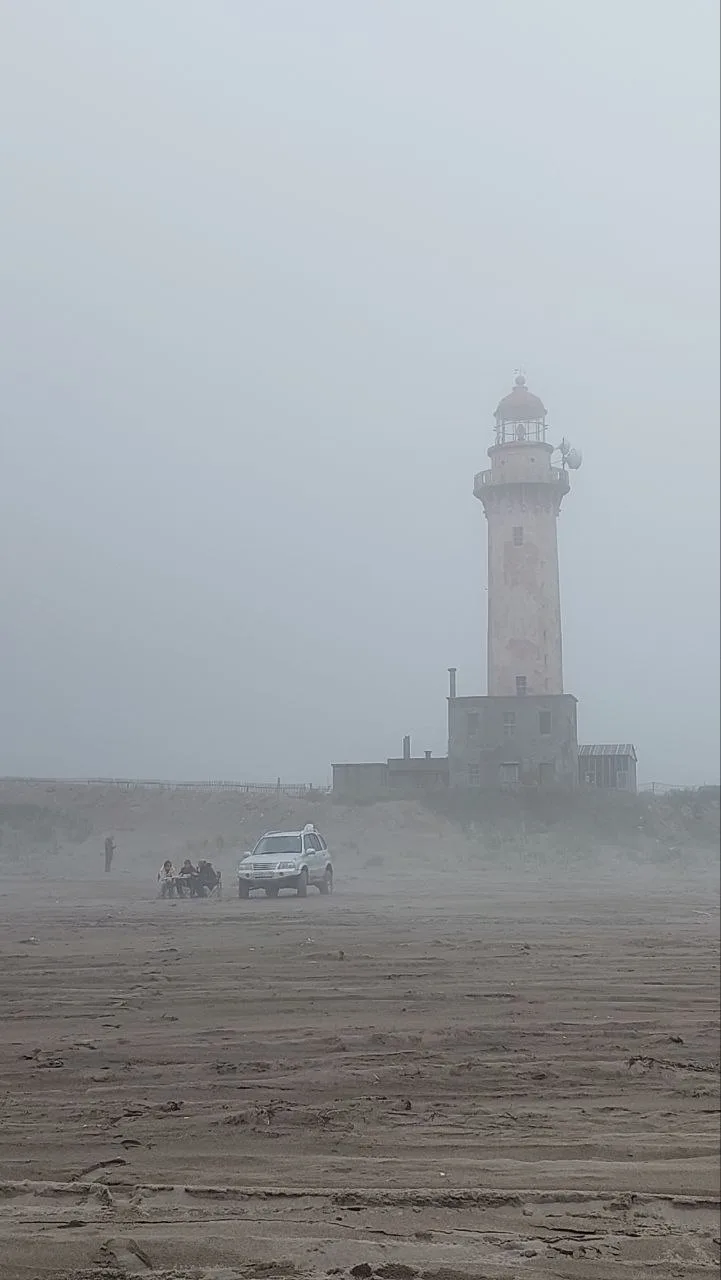
The tower itself is compact reinforced concrete, modest in height compared to Aniva's 31 metres, but well placed on the headland to throw its beam across the shipping lanes. Around it: windswept scrub plateau; below: stony beach and wave-cut rock shelves. The Sea of Japan on this stretch is open to the south-west and unsheltered — the colour runs to a deeper blue-grey, the swell arrives in long even sets, and on clear days the horizon reads with an unusual clarity.
The approach
Slepikovsky lies on the south-west coast south of Nevelsk, in the same wing of the island as the Krilon Peninsula. From Yuzhno-Sakhalinsk, allow three to four hours by 4WD along the coastal road through Nevelsk; the final stretch is a short dirt track to the headland itself, where the complex sits on the upper plateau above the water.
The lighthouse is an active navigational facility within a border-controlled zone. Our guide follows entry protocol and briefs guests in full before reaching the compound. The tower, the working lamp mechanism, the open sea ahead and the awareness that this building stood here before the Second World War — that combination needs no decoration.
Practical information
- Permit: The south-west coast is a border-controlled zone; an FSB pass is required. AMIST handles applications — allow 30–60 days, carry passport throughout.
- Season: June through September is the most reliable window for road and weather; outside it, access is possible with preparation but road quality drops.
- Drive: Yuzhno-Sakhalinsk via Nevelsk, 3–4 hours by 4WD; usually combined with a wider south-west or Krilon Peninsula expedition.
- Photography: As an active border-zone facility, photography of the tower may be restricted; the guide briefs the rules on site.
- Bring: Windproof shell, warm mid-layer (the Sea of Japan stays cool even in summer), sturdy footwear for the coastal track.
The most complete of the three
Three lighthouses define Sakhalin in our guests' minds: Aniva — famous but silent; Krilon — historically rich but logistically demanding; Slepikovsky — still operating, still turning, still doing the job it was built to do in 1934. For travellers who care about the intersection of maritime history and working infrastructure, Slepikovsky is the most complete of the three. Japanese construction, Soviet maintenance, Russian operation — and the same nightly beam crossing the Sea of Japan. AMIST programmes the cape into our south-west and Krilon Peninsula routes, for guests who want to see the coast as a whole, not as isolated monuments.
Gallery
1 / 3
On the map
Want to see Cape Slepikovsky?
We will arrange an excursion to this and other attractions