Sakhalin
1 photo
Reydovo Fish Factory
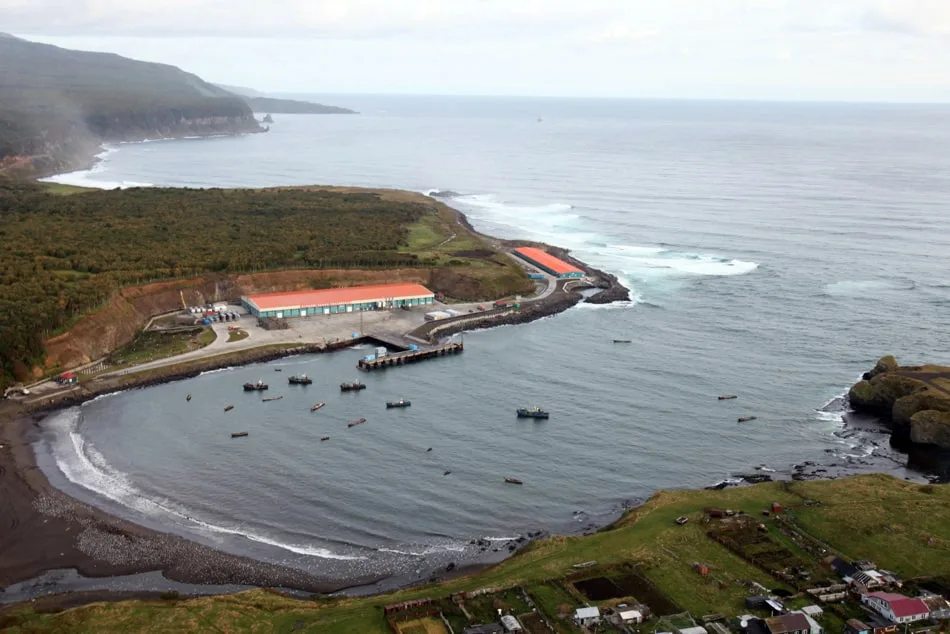
A working salmon cannery on Iturup — annual fish calendar and a live production line
Description
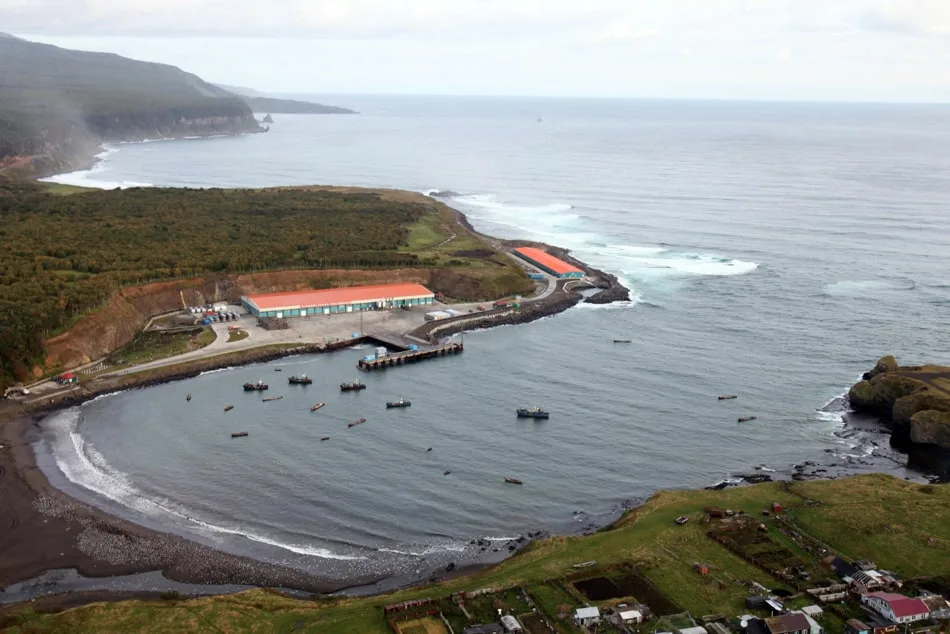
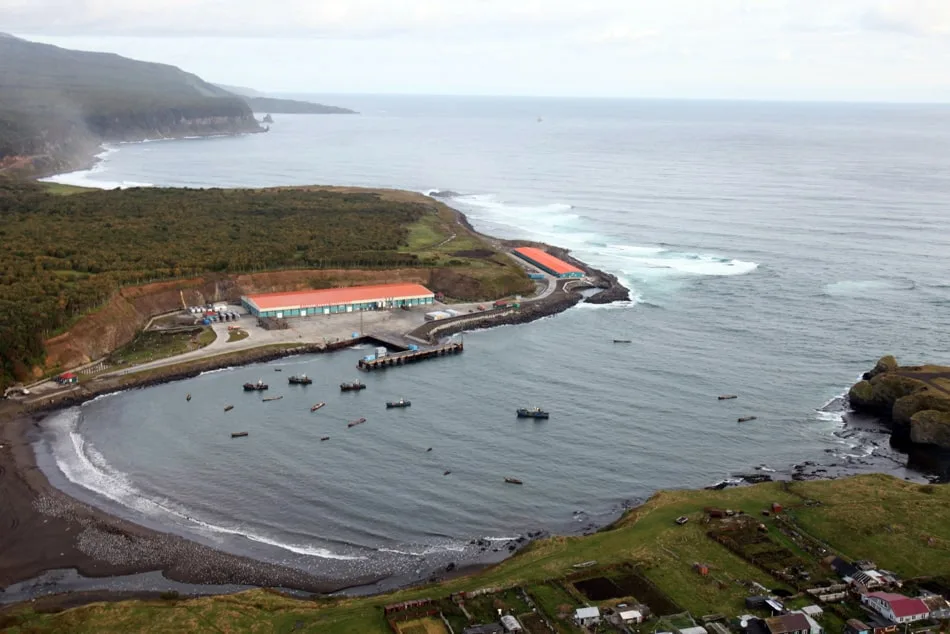
Reydovo Fish Factory is one of the most tactile industrial experiences in the Russian Far East. A working salmon cannery on the shore of Iturup, where wild Pacific salmon and a Soviet engineering tradition still run by the same calendar.
The fish calendar
The plant handles the full cycle: fishing, processing, sales. Different fish run through the lines in different seasons:
- Spring (March–June): "mixed catch". Alaska pollock, cod, flounder, Atka mackerel, halibut. Fish arrive in mixed runs and the lines retune for the species several times a week.
- Summer (July to mid-September): "pink salmon season". The wild pink (gorbusha) run: peak load on the plant, round-the-clock shifts, the bulk of the year's canning.
- Autumn (September–November): "chum season". Chum salmon (keta) arrives at a steadier pace; roe and dried-fish lines run alongside.
Winter brings almost no fish: crews move to maintenance, line repairs and preparation for the spring cycle.
From a Japanese workshop to a Soviet enterprise
The roots of Reydovo go back to the Japanese Karafuto period: as early as the start of the 20th century, the enormous Kuril salmon runs drew industrial capital from Honshu, and a chain of workshops lined the southern coast of Iturup — among them the predecessor of today's factory. After 1945 the enterprise passed to Soviet management and was rebuilt as a full canning-and-salting complex — one of dozens that made Sakhalin Region the USSR's leading Pacific salmon producer.
Today the factory mainly processes pink salmon and chum salmon caught in Kasatka Bay and the surrounding waters of southeastern Iturup. Peak annual volumes in the August–October season run to thousands of tonnes for both domestic and export markets.
What you see on the visit
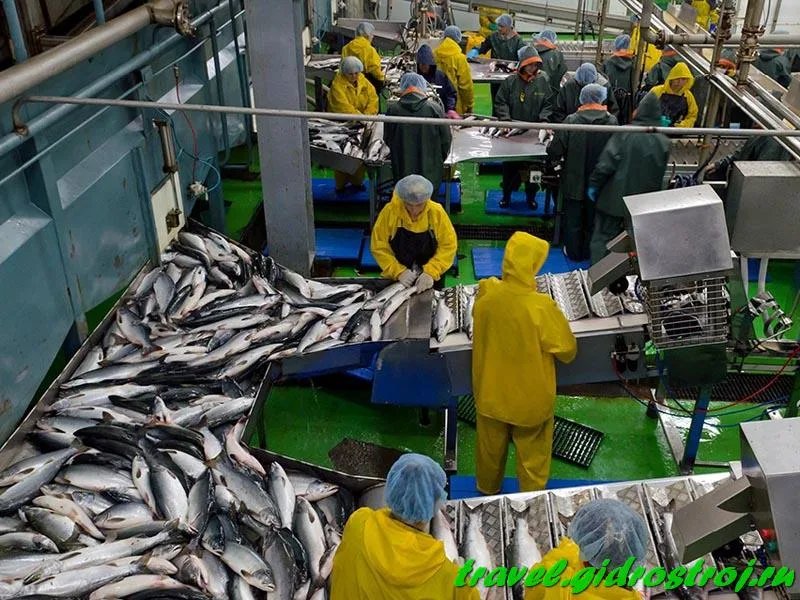
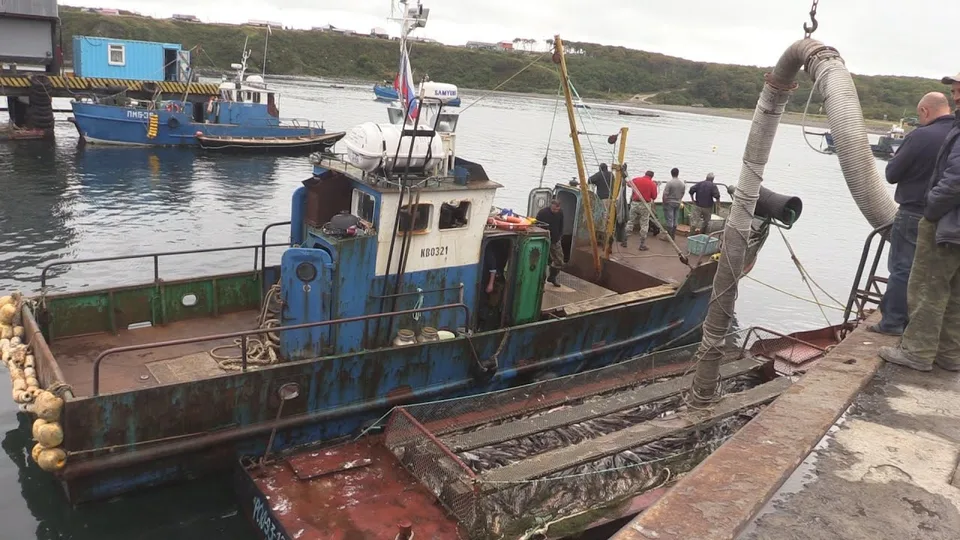
Tours during the active season cover the full technology chain: unloading from fishing vessels, sorting, gutting and roe extraction, salting tanks, sealing and dispatch of finished product. The smell of the sea and freshly cut fish is absolute — this is not a museum or a reconstruction but a live enterprise, where the visitor walks alongside workers on a full production shift.
Outside the workshop, the bay itself runs a parallel show. In peak weeks the water at the outfall moves with salmon; Steller sea lions patrol the edges of the catch. Upstream on the rivers, brown bears come to the spawning beds — visible at a safe distance under the guide's eye.
Practical information
- Season: August through early October for the most active runs and the plant at full load. The spring "mixed catch" is interesting for guests with a specific interest in the fishery.
- Access: Reydovo village is about 30 km by road from Kurilsk, Iturup's administrative town. AMIST programmes the factory into multi-day Iturup itineraries.
- Bring: Waterproof footwear is essential; a light rain shell; clothing you don't mind smelling of fish for a day. Photography is allowed in production areas under guide instruction.
- Access to the floor: Depends on the production schedule; AMIST confirms a couple of days before departure.
- Permit: Iturup is a border-controlled zone; an FSB pass is required. AMIST handles applications — allow 30 working days.
Contact with the working island
Kuril itineraries are usually built around volcanoes and coastlines; Reydovo offers something rarer — a direct encounter with the working economy of a remote island. The fishery that has given several generations of islanders a livelihood unfolds in front of you. For guests who want to understand how the Far East actually runs, it is a memorable stop. AMIST arranges access with the management in advance and times the visit so a production shift and an active salmon run align on the calendar.
Gallery
1 / 4
On the map
Want to see Reydovo Fish Factory?
We will arrange an excursion to this and other attractions