
Island Iturup
2 photos
Kasatka Bay
An uninhabited Iturup bay from which thirty-one Imperial Navy warships sailed for Pearl Harbor on 26 November 1941
Description
Kasatka Bay cuts deep into the north-eastern coast of Iturup — one of the finest natural harbours in the Kuril Islands, and one of the most consequential anchorages in modern history. In November 1941, thirty-one warships of the Imperial Japanese Navy's Kido Butai lay quietly here before sailing east to change the world.
Pearl Harbor begins at Kasatka
On 22 November 1941 Japan's First Air Fleet completed its assembly in Kasatka Bay under strict radio silence. The bay was chosen deliberately: wide enough for a full carrier strike group, deep enough for capital ships, its forested ridges screening the fleet from observation. Six aircraft carriers (Akagi, Kaga, Sōryū, Hiryū, Shōkaku, Zuikaku), two battleships, three cruisers and nine destroyers anchored here before departing on 26 November on the route that ended at Pearl Harbor on 7 December.
No monument marks the anchorage. The bay looks today as it did then: dark water, forested ridges, a narrow entrance, silence. That historical weight — carried entirely by the landscape — makes Kasatka one of the most thought-provoking stops on any Iturup itinerary.
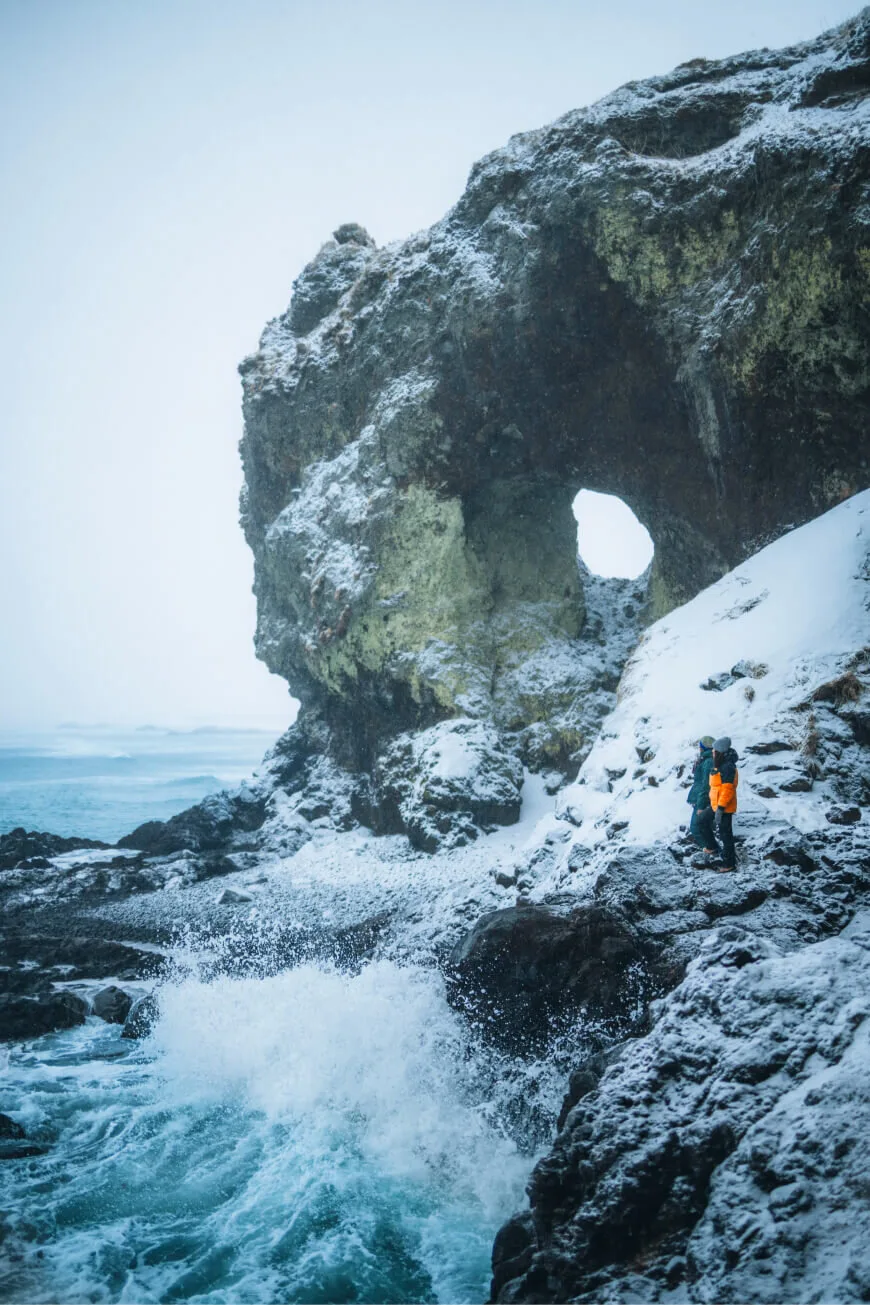
On the shore stands Chyortova Skala — "Devil's Rock" — cut through with natural and artificial tunnels and caves; part of the tunnel system belongs to Japanese-era coastal fortification and remains partially open to a guided visit.
The bay today
Kasatka is approximately 10 km across at its widest, its shores largely uninhabited. Waters support strong pink and chum salmon runs; Steller sea lions use the northern headlands seasonally; the surrounding forests shelter red fox, Iturup brown bear, and Kuril white-tailed eagle. The fish from these waters feed the Reydovo cannery in the valley to the south.
It is almost always quiet here. From the shore the bay reads by the breath of the swell and the cry of seabirds; in August the noise of salmon mass driving upriver is added to that.
Practical information
- Access: About 25 km by dirt road from Kurilsk; in fair weather, a small-boat approach from Kurilsk harbour is also possible.
- Best season: July through September; late August for salmon runs.
- What to look for: Devil's Rock with its tunnels and fragments of Japanese-era coastal fortifications near the northern headland; binoculars for sea lions and eagles on the far promontories.
- Time: Half a day; usually programmed into a multi-day Iturup itinerary.
- Permit: Iturup is a border zone; an FSB pass is required. AMIST handles applications — allow 30 working days.
How the angle of view shifts
Understanding what happened in complete silence behind these forested ridges at the end of November 1941 changes the angle from which you see the entire Kuril chain. AMIST has worked Iturup for over twenty years; the guide tells history and ecology in parallel, and the guest leaves with a finished picture of this exceptional bay — not a postcard frame with no caption.
Gallery
1 / 2
On the map
Want to see Gulf Касатка??
We will arrange an excursion to this and other attractions