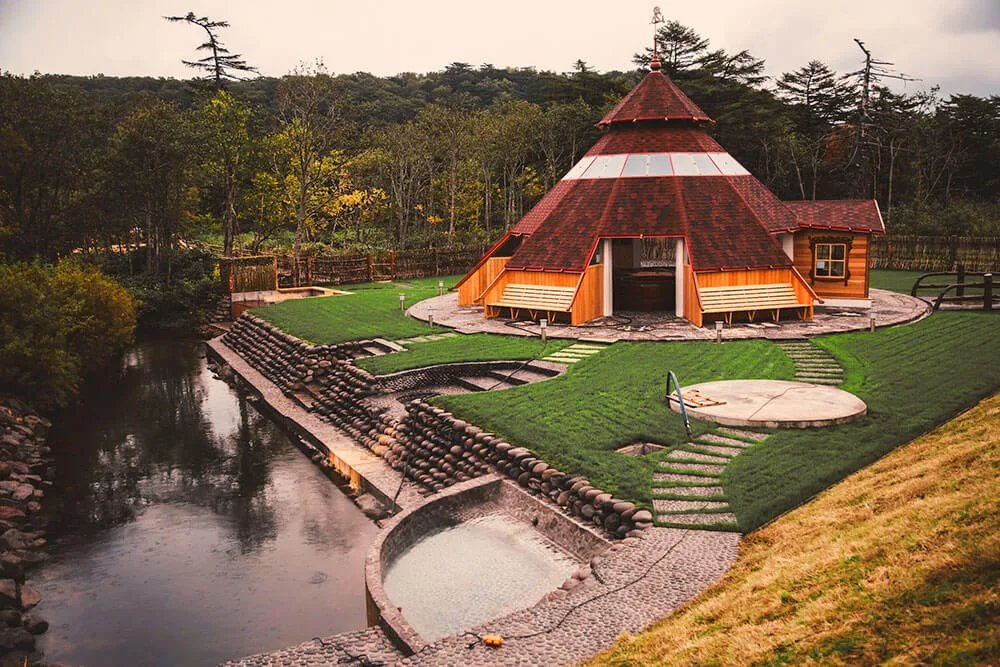
The Kuril Islands present a remarkable range of landscapes across 56 islands. Of these, only four are inhabited, yet all of them have developed enough infrastructure to allow thousands of visitors each year to travel into the islands' daily life. Every corner of the Kuril chain is distinct — a claim every returning traveller will confirm. These islands form their own micro-world: a particular character, a particular atmosphere. The destinations worth knowing about are described below.
Southern Kuril Islands: Kunashir, Shikotan and Iturup
The Southern Kuril Islands, part of the Russian Federation, are a singular and quietly mysterious place. Kunashir, Shikotan and Iturup stand out among them: each opens a different register of landscape — vivid scenery, rich flora and fauna, and a layered historical record. All three are inhabited.
Kunashir
Kunashir is the southernmost island of the Kuril chain. It is known for its thermal springs and persistent volcanic activity. The island's signature landmarks are the Tyatya, Ruruy and Mendeleev volcanoes. Visitors can explore unusual geological formations and encounter local plant and animal life found nowhere else in Russia. The island's proximity to Japan sharpens its historical and cultural significance.
Kunashir is not only one of the four inhabited islands but also one of the most visited. It is possible to stay here in comfort — the island has hotel accommodation for travellers.
Frequently visited sites include the hot-spring beaches at the famous 17th Kilometre, the volcanoes, and the capes — among them Cape Stolbchatiy, a UNESCO World Heritage listed basalt column formation. Golovnin Caldera, with its Boiling Lake (Kipyashcheye) and Hot Lake (Goryacheye), is another draw that few visitors leave without seeing.
Shikotan
Shikotan differs from the rest of the Kuril Islands in its terrain. The island is known for its beaches and secluded coves with clear water — making it a natural fit for divers and those interested in marine flora. Rocky shores, bamboo thickets and a variety of marine mammals attract eco-tourists and photographers. Despite its modest size, Shikotan carries notable cultural heritage: remnants of Ainu settlements and Japanese-era school buildings dating to the period of Japanese administration.
Shikotan's landscape holds its own in every season, but autumn is when the forests colour most vividly. The island is also home to Cape Kraj Sveta — the «Edge of the World» — a cliff-top viewpoint that leaves a deep impression even on well-travelled guests.
Iturup
Iturup is the largest island in the Kuril chain, with a notable range of geological and natural features. Volcanic activity is visible throughout: in the abundance of hot springs, sulphur deposits, and the climatic conditions that favour the survival of relict plant species. The island has warm sandy beaches, mountain ridges, and cascading waterfalls. Iturup is also marked by historical monuments — Japanese forts and bunkers that document the contested history of the archipelago.
Nearly every Kuril excursion itinerary includes Iturup. The island holds thermal springs, active volcanoes, hot lakes and scenic capes. Destinations within the island include the Belye Skaly (White Rocks), Yankito Plateau, Kasatka Bay and the Ilya Muromets Waterfall. Iturup also draws fishing enthusiasts to its productive surrounding waters, which support a wide range of marine fish species.
Northern Kuril Islands: Paramushir, Matua, Onekotan, Shumshu and Atlasova
The Northern Kuril Islands, positioned closer to the Kamchatka Peninsula, form an equally compelling section of the Kuril chain. This part of the archipelago draws researchers, historians and independent travellers with its natural and historical sites.
Paramushir Island
Paramushir is one of the largest islands in the Kuril chain and the only inhabited island among the northern group. Its dramatic volcanic scenery and the diversity of seabird species make it a destination for eco-tourism and wildlife photography. The island's focal point is Ebeko Volcano, whose ongoing activity draws scientific attention from researchers across several countries. Despite its remoteness, Paramushir is accessible via the airport at Severo-Kurilsk, with air links organised through Petropavlovsk-Kamchatsky.
Matua Island
Matua is known for its warm springs and the abandoned military infrastructure from the Second World War. The surviving structures constitute a complete world for those interested in history and expedition travel. Oceanic currents around the island sustain a rich marine ecosystem, which adds to its appeal for divers.
Reaching Matua is a serious undertaking — it requires a well-prepared expedition and the advance acquisition of the necessary access permits.
Onekotan Island
Onekotan is another uninhabited island, but one of exceptional draw. Its defining feature is Krenitsyn Volcano (1,324 m), enclosed entirely by Kol'tsevoye Lake — a caldera lake with a depth of 369 metres. In the northern part of the island stands a second volcano, Nemo (1,019 m). The last recorded eruptions of these two volcanoes occurred in 1902 and 1952 respectively.
The island offers challenging but visually extraordinary routes for expedition travel. Access is genuinely difficult, and the notoriously unpredictable Kuril weather adds another variable.
Shumshu Island
Shumshu is the northernmost of the Kuril Islands, situated 11 km from Kamchatka. It carries a particular weight of military history: the assault on Shumshu was the decisive engagement of the Kuril landing operation (18 August – 1 September 1945), and numerous military relics remain on the island. Its coastline offers views across to neighbouring islands and encounters with diverse marine life. Reaching Shumshu is not straightforward — and obtaining the required access permits is essential before travel.
Atlasova Island
Atlasova is a small island defined by its active Alaid Volcano — the tallest volcano in the Kuril chain, reaching 2,339 metres. The cone is a classic symmetrical form with steep flanks, frequently capped in snow.
The area around the volcano is rich in geothermal springs and hot mud pools, which makes Atlasova a site of interest for scientists and curious travellers alike. Foxes and seabirds add a wildlife dimension to any visit.
The Kuril Islands reward travellers who value distinctive natural environments within their own country. Their unique geological record and layered history create an impression that is hard to replicate — and provide an experience unlike anything else in the Russian Far East. AMIST runs tours to the Kuril Islands throughout the summer season; we are glad to advise on the right island and itinerary for your travel objectives.
AMIST Tour-Business Club