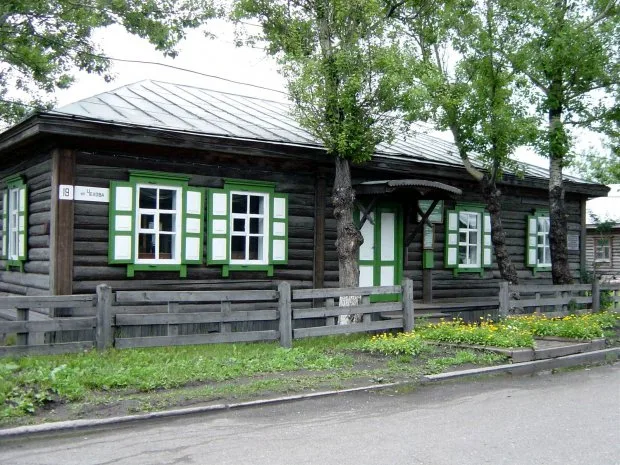
Sakhalin Island is a singular region of Russia, where extraordinary natural landscapes are woven together with layered history. Among the most rewarding ways to engage with the culture and traditions of the island is to visit its local museums. Below we introduce several of the key institutions on Sakhalin Island that merit a place at the top of any visitor's list. Each offers a distinct lens on the life and heritage of Sakhalin.
Sakhalin Regional Museum
In July 1935, construction began in the city of Toyohara — now Yuzhno-Sakhalinsk — on a new building for the museum of the Karafuto Prefecture governorate. The structure was raised on Jinja-dori Street, today's Kommunistichesky Prospekt, as part of a ceremonial programme marking the 30th anniversary of the Japanese presence in southern Sakhalin.
Construction took two years, and on 1 August 1937 the museum officially opened its doors. The architect was Yoshio Kaizuka, who chose the neo-Japanese nihon-zukuri style, later known as teikan-zukuri — the imperial crown style — giving the building a profile that still evokes a mediaeval Japanese castle.
From 1946, following the renaming of Toyohara as Yuzhno-Sakhalinsk, the building continued to serve its museum purpose and became the Sakhalin Regional Museum. It is both a listed architectural monument and a symbol of the historical heritage of the Sakhalin Region.
The museum holds more than 220,000 exhibits covering an exceptional breadth of subjects: the island's flora and fauna, regional climate, the ancient history of Sakhalin and the Kuril Islands, the cultures of indigenous peoples, the exploration and cartographic history of the islands, and the story of Sakhalin from the mid-nineteenth century to the close of the twentieth.
Museum of the History of the Sakhalin Railway
The Museum of the History of the Sakhalin Railway is unique in Russia. The island's particular climate, topography, and political history produced a railway that developed along a path unlike any other in the country.
The outdoor and indoor collections include a Japanese two-axle flat wagon, a Wajima snowplough built in 1939, a steam excavator on crawler tracks, a Sumitomo crane rated to 50 tonnes, a carriage from the celebrated Kiha diesel railcar series, and other examples of the railway's singular engineering heritage.
Note that the open-air exhibition is accessible on weekdays only.
Literary and Art Museum of Chekhov's Book Sakhalin Island
Founded in 1989 as a public organisation, this museum has grown into a singular repository uniting the history and legacy of one of Russian literature's most celebrated families — the Chekhovs.
The collection today numbers an impressive 14,500 objects. Among them are authentic relics belonging to the Chekhov family: a travelling bag, medical needles, a cut-throat razor, sugar nippers, an oil lamp, and even a jam-making basin — objects that open a vivid window onto the everyday life of the era. Among the most prized individual items is a letter from Anton Pavlovich Chekhov to Olga Ivanovna Cherepova-Orlovskaya, along with paintings and graphic works produced by Chekhov family artists Sergei Mikhailovich and Sergei Sergeyevich.
The museum's particular pride is the world's largest collection of editions of Anton Chekhov's book Sakhalin Island, in Russian and in foreign languages. The archive also holds copies of all the census cards that Chekhov completed during his research for the work — more than 7,500 documents — as well as precious copies of the manuscript drafts.
The museum does not merely preserve artefacts; it carefully transmits the atmosphere of a period, drawing visitors into the world of the great writer and his family, where every object has a story to tell.
Victory Museum and Memorial Complex
Opened on 2 September 2017 — a date symbolically chosen to mark the 72nd anniversary of victory in the Second World War — the Victory Museum and Memorial Complex has become one of the significant cultural centres of the Sakhalin Region. The building stands on the square of the same name, in direct proximity to the memorial dedicated to the 30th anniversary of victory over militarist Japan.
The institution's core mission is the preservation and promotion of the region's cultural and military-historical heritage. Its specialists work to draw public attention to the rich history of the Sakhalin Region, which for centuries has figured in the military chapters of Russia's past.
The Sakhalin Region is a land of dense military history. Four wars played out key episodes here: the Crimean War of the mid-nineteenth century, the Russo-Japanese War of the early twentieth century, the Civil War and foreign intervention, and the Second World War. The island's residents fought with distinction throughout the Great Patriotic War and took part in local conflicts and armed confrontations of the latter half of the twentieth century.
Scientific research is a substantial part of the museum's work. Its specialists build the collections, study, and publicise the region's military-historical and cultural heritage. The museum also devotes considerable effort to patriotic education, working closely with youth military organisations and serving personnel. A regular calendar of themed exhibitions, creative evenings, and presentations keeps its halls animated — a living bridge between historical past and the present, joining generations around the memory of heroic deeds and the importance of preserving that record.
Historical Park Russia — My History
The Historical Park Russia — My History is a multimedia complex of exhibitions dedicated to the history of Russia from its origins to the present day, created using advanced interactive technology.
Visitors can take part in historical quizzes, attend a panoramic cinema, browse "living books" that respond to the touch, and experience a range of other immersive formats.
Chekhov and Sakhalin Historical-Literary Museum (Aleksandrovsk-Sakhalinsky)
The Historical-Literary Museum A. P. Chekhov and Sakhalin, located in the city of Aleksandrovsk-Sakhalinsky, is the oldest museum on Sakhalin Island. It was established in 1896 by Order No. 226 of 6 December that year, signed by Military Governor of Sakhalin V. D. Merkazin. The complex is one of eight memorial museums worldwide dedicated to the physician and writer Anton Pavlovich Chekhov.
The museum's holdings number more than 20,000 items. Its most significant collection is that of numismatic objects. Among the individual highlights are rare books published before 1917 and several authentic personal possessions of Chekhov himself. The archive also holds a series of artistic works on Sakhalin themes by Sergei Mikhailovich Chekhov, the writer's nephew.
In Conclusion
Sakhalin Island is a great deal more than spectacular scenery and rare wildlife. The island carries a rich cultural heritage that comes to life in its regional museums. Visiting them offers not only an immersion in the atmosphere of Sakhalin but also a deeper understanding of its history, traditions, and cultural character.
Every museum on the island is distinctive. Together they offer compelling programmes and collections that illuminate the enigmatic identity of Sakhalin. If you are planning a journey to this region, including a museum visit in your itinerary will deepen the experience with new discoveries and lasting impressions.
For those who value ease and prefer not to spend time on logistical details, Sakhalin offers a wide range of ready-made tour programmes, many of which already incorporate museum visits. This approach makes for a comfortable, enriching journey — allowing you to enjoy the beauty of the island and touch its history without any of the planning burden.
AMIST Tour-Business Club