Sakhalin
1 photo
Torii of Vzmorye
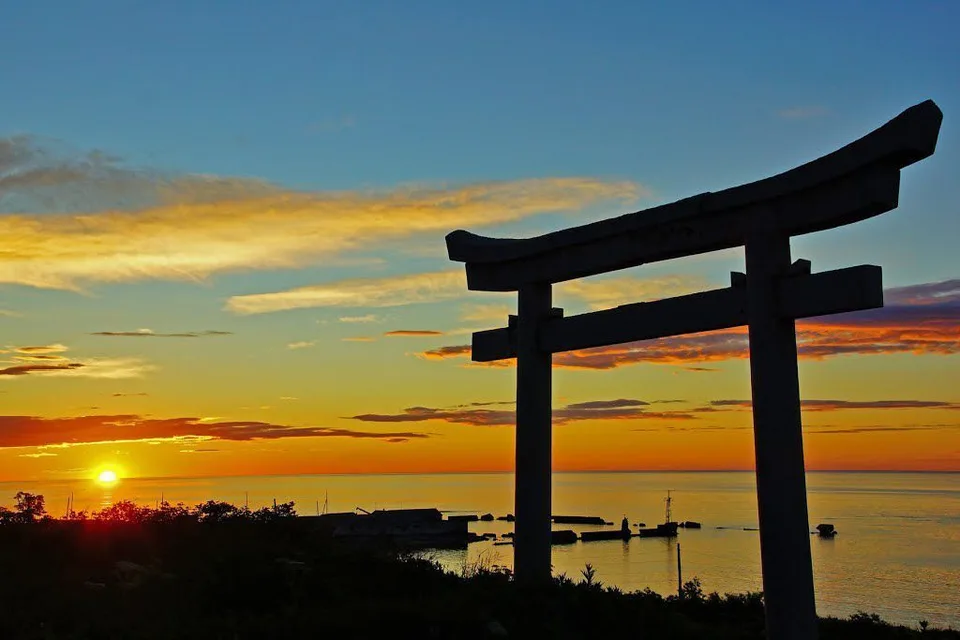
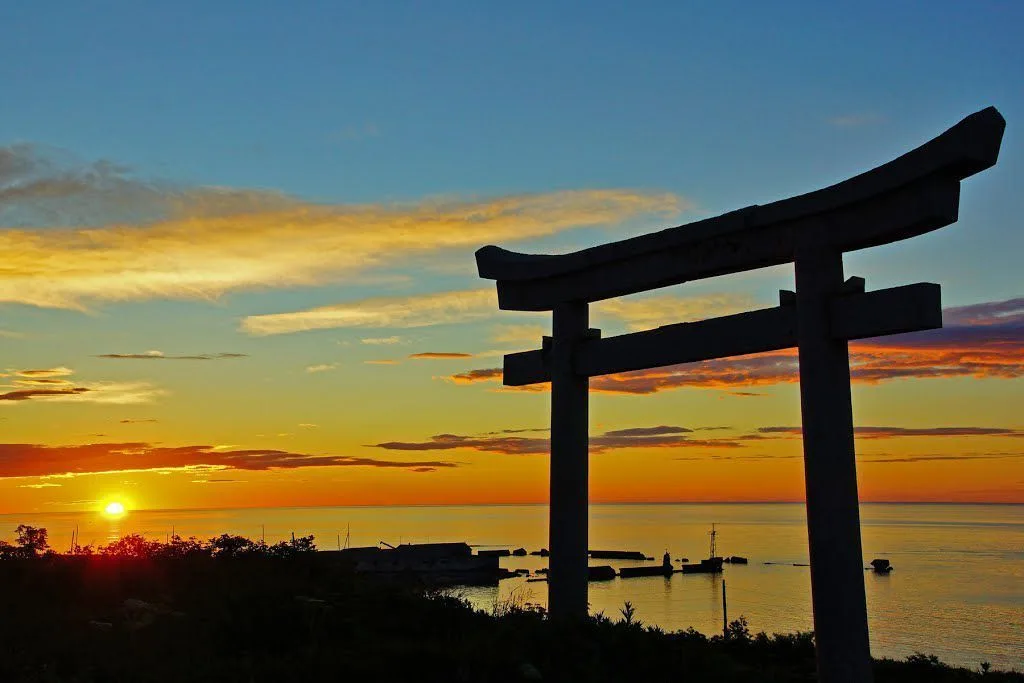
A 1940 Japanese marble torii on the Sea of Okhotsk shore — the remains of the Higashi-Shiraura Inari-jinja shrine
Description
A lone stone torii on the edge of a pebble beach in Vzmorye village, on Sakhalin's eastern shore — a gate to a shrine that no longer exists, framing the sea horizon exactly as it did under the Japanese flag more than eighty years ago.
Karafuto, 1914 — 1945
During the Karafuto Prefecture period (1905–1945) southern Sakhalin held a dense network of Shinto shrines serving the Japanese settler population. Every significant settlement had at least one, approached along a ceremonial sandō path marked by stone or wooden torii gates. The shrine at Vzmorye — Higashi-Shiraura Inari-jinja, "Eastern Shrine of Shiraura" (Shiraura being the Japanese name of the village) — opened in 1914.
The shrine itself was demolished after southern Sakhalin came under Soviet administration. What remains is a single torii gate, raised in 1940. The structure carries a 1940 inscription dated by the Japanese imperial calendar — its 2600th year; on the reverse, the name of Yamagi Takeo, the patron whose funds paid for the gate. Of the entire Karafuto-era shrine infrastructure on Sakhalin, only a handful of torii survive.
What a torii is
A torii is the symbolic gateway of a Shinto shrine — a jinja, literally "the dwelling of a god". Japanese mythology tells of the sun goddess Amaterasu hiding in a cave, plunging the world into darkness; to lure her out, the deities built a perch and placed a rooster on it, whose crowing woke the sun. Since then, torii — literally "bird-perch" — have been raised before shrines, and the rooster, ondori, has been treated as a sacred bird. The gate's silhouette — two uprights and two crossbeams — has held that logic for centuries.
The Vzmorye gate is built of marble in the miyadzu tradition: the classical myōjin form, with the upper crossbeam upturned at the ends and a rectangular aperture for the shrine name plate. This is not the timber of typical Japanese construction; the stone has weathered more than eighty years of sea spray and coastal frost and stands almost intact — a testament to Karafuto's stone-cutters.
The setting
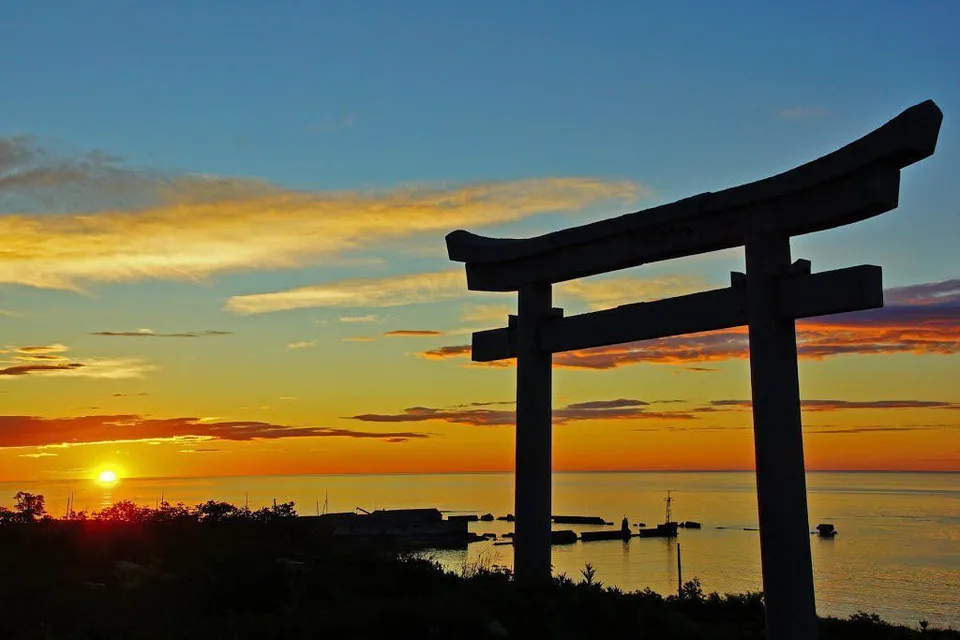
What sets this torii apart from most surviving on Sakhalin is its placement. Most Karafuto gates today stand in scrub or beside a forest lane. This one stands directly above the Sea of Okhotsk shore. At low tide its reflection pools in the rock-flats; at high tide small waves lap its footings. At dawn or in the slanted late-afternoon light, in counter-light from the sea, the composition reads as one of the most characteristic on Sakhalin.
The approach road is unpaved, lined with Sakhalin wild plants — burdock, giant cow-parsnip, mixed flowering meadow. A small open-air herbal at the edge of the road; the guide picks out what grows where, and why.
Practical information
- Location: Vzmorye village on the eastern, Sea-of-Okhotsk side of Sakhalin, about 100 km from Yuzhno-Sakhalinsk. Sealed road plus a short dirt section. Any car will reach it.
- When to go: May through October, before winter frosting begins. Best light at dawn and an hour before sunset.
- Pairings: Combines well with an east-coast day around Zhdanko Ridge, Tikhaya Bay and the Klokovsky Waterfall.
- Etiquette: A cultural heritage object — do not touch, climb or hang anything on the structure.
Sakhalin's Japanese layer
Sakhalin is three or four histories laid one over another. The Vzmorye torii is one of the rare places where the Japanese layer is neither buried under Soviet construction nor dissolved into the forest: it stands directly on the shore, in clean geometry. AMIST programmes the gate into east-coast routes as a short but necessary footnote to the conversation about who has lived on this island over the last hundred and fifty years.
Gallery
1 / 2
On the map
Want to see Torii of Vzmorye?
We will arrange an excursion to this and other attractions